














A two-day national workshop titled Sustaining Innovation: Embedding R&D in State Institutions, convened by the NITI Aayog, concluded at the Amrita Vishwa Vidyapeetham campus in Coimbatore on January 9. The workshop focused on strengthening research and innovation frameworks within state institutions to support evidence-based policymaking, scalable innovation and long-term development outcomes.
The event was organised in collaboration with Amrita Vishwa Vidyapeetham and the Tamil Nadu State Council for Science and Technology. Policymakers, scientists and representatives from academic and research institutions from across the country participated in the discussions.
Delivering the special address, Suman Bery, vice chairman of NITI Aayog, said that “the research undertaken at Amrita Vishwa Vidyapeetham is deeply rooted in addressing real-world challenges faced by ordinary people.” He noted that the prime minister believes many of today’s societal challenges can be addressed only through the purposeful application of technology, and stressed the need to align research outcomes with national priorities and public welfare.


The workshop opened on January 8 with a welcome address by Maneesha Vinodini Ramesh, pro vice chancellor of Amrita Vishwa Vidyapeetham, who highlighted the responsibility of universities in building strong and sustainable R&D ecosystems. In a video message, Mata Amritanandamayi Devi, chancellor of the university, spoke on inclusion, compassion and the responsible use of technology as essential pillars of societal progress.
V. K. Paul, member of NITI Aayog, underlined the importance of embedding research and development deeply within institutions to ensure that innovation remains sustained and impactful.
S. Vincent, member secretary of the Tamil Nadu State Council for Science and Technology, said Tamil Nadu is currently at the forefront of patent filings in India, with nearly 5,000 to 6,000 applications filed annually. He said Amrita Vishwa Vidyapeetham is a key contributor to this performance and added that the state government supports the geographical indication products being developed by the university.
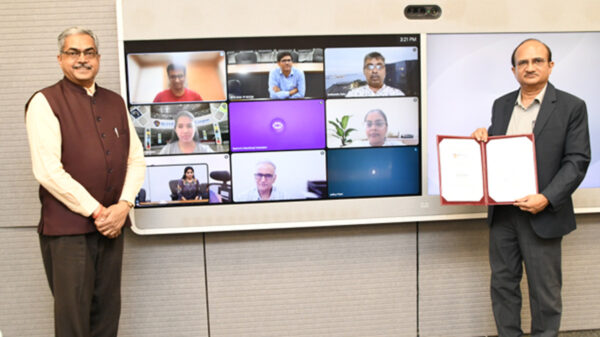
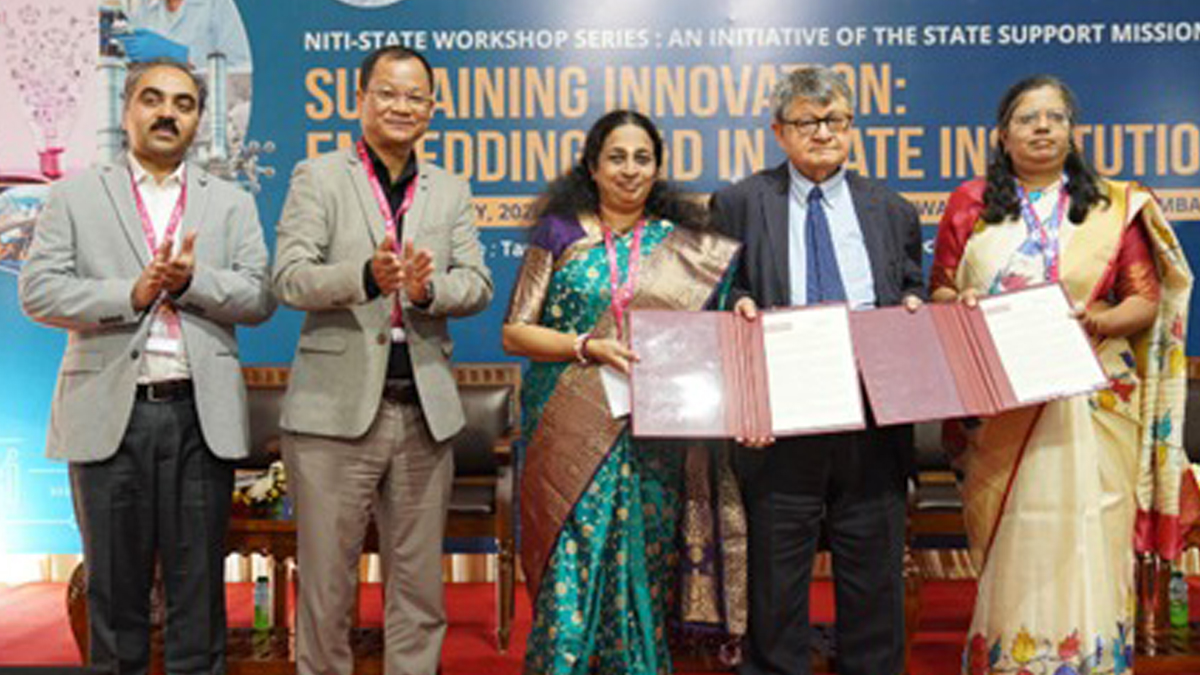
One of the outcomes of the workshop was the signing of a memorandum of understanding between Amrita Vishwa Vidyapeetham and the CSIR–National Institute of Science Communication and Policy Research, New Delhi, to facilitate collaboration on research and science-and-technology initiatives. The MoU was exchanged by Maneesha Vinodini Ramesh and Geetha Vani Rayasam, director of CSIR–NIScPR.
The programme also included a session recognising contributions to policy-linked development and innovation by Suman Bery, Lalnilawma, minister for rural development and disaster management, Government of Mizoram, and Geetha Vani Rayasam. Two publications—Changing Dimensions: A Journey from Immersion to Impact and Scholars for Sustainability—were released during the inaugural session.
Across two days, the workshop featured technical sessions and panel discussions on strengthening state science and technology councils, institutional mechanisms for innovation through state-level missions, and aligning grassroots innovation with policy frameworks. The deliberations concluded with shared insights and broad recommendations aimed at developing inclusive, technology-enabled and outcome-oriented R&D ecosystems across states.
The workshop was attended by 79 external participants representing government departments, research organisations, state science and technology councils and academic institutions from across India.
Author