



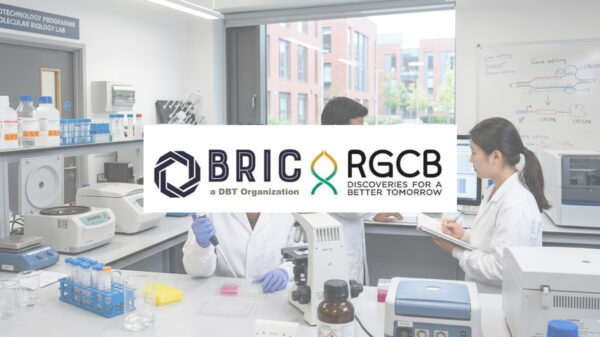










A new study by scientists at BRIC-Rajiv Gandhi Centre for Biotechnology has provided fresh insights into the mechanisms governing brain development and the long-term maintenance of neural stem cells, with potential implications for future therapeutic interventions in neurological disorders.
The research, conducted at the institute’s Thiruvananthapuram campus, highlights India’s growing role in advanced neuroscience research and its contribution to global efforts to understand brain development and regeneration.
The findings have been published in the journal Proceedings of the National Academy of Sciences (PNAS), one of the world’s most widely cited multidisciplinary scientific publications.


Led by Jackson James, the study identifies and characterises a previously unrecognised population of neural stem cells that play a critical role in both brain development and its lifelong maintenance. The researchers describe these cells as Notch-independent Hes1-expressing neural stem cells (NIHes1 NSCs), a distinct group that functions independently of the conventional Notch signalling pathway.
The discovery challenges earlier assumptions that neural stem cells are largely homogeneous and suggests a more complex regulatory framework underlying brain development and regeneration.
“Our findings advance the understanding of how the brain develops and sustains its regenerative potential throughout life,” James said. “Identifying a population of neural stem cells that functions independently of traditional Notch signalling opens up new directions for therapeutic strategies targeting neurological conditions.”
The study employed advanced methodologies, including single-cell transcriptomics and conditional knockout mouse models, to precisely map and analyse these neural stem cell populations.
Author