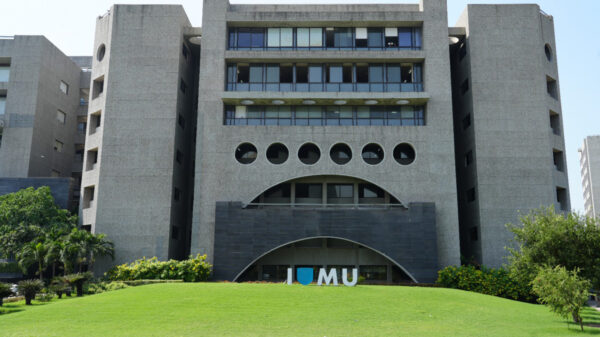
















At a time when India is strengthening its semiconductor ambitions, researchers at IIIT Hyderabad are building indigenous electronics that move seamlessly from chip design to real-world deployment.
From custom integrated circuits and millimetre-wave radar systems to privacy-preserving sensing and intelligent healthcare technologies, the institute’s IC-WiBES research group is working across the full electronics stack — linking silicon to systems in ways that directly address national and societal needs.
Silicon-to-System Philosophy


At the heart of this effort is the Integrated Circuits – Inspired by Wireless and Biomedical Systems (IC-WiBES) research group, led by Abhishek Srivastava. The lab follows a “vertical integration” model — designing electronics not as isolated chips, but as end-to-end technologies that function in real-world environments.
Rather than separating chip design, signal processing and applications into silos, the group works across all three layers simultaneously. This dual-track approach ensures that hardware is shaped by deployment realities, not just theoretical specifications.
“Our students learn how circuit-level constraints shape system intelligence — a rare but increasingly critical skill,” Srivastava notes.
Why Custom Chips Still Matter
While off-the-shelf electronics suffice for many consumer applications, strategic domains such as healthcare monitoring, privacy-sensitive sensing, space missions and national infrastructure demand more control and efficiency.
The IIIT-H team focuses on application-specific integrated circuits (ASICs) that offer higher precision, energy efficiency and flexibility. Crucially, these chips evolve continuously based on feedback from field deployments, ensuring circuit-level improvements translate directly into better system performance.
Millimetre-Wave Radar Beyond Automobiles
One of the lab’s most impactful areas is millimetre-wave (mmWave) radar sensing — a technology widely used in automotive safety but still underexplored in healthcare and civic applications.
Unlike cameras, mmWave radar operates reliably in low light, fog, rain and dust. It also preserves privacy by avoiding visual data capture. By transmitting and receiving high-frequency signals, these systems can detect motion, distance and even minute vibrations such as the movement of a human chest during breathing.
Contactless Healthcare Monitoring
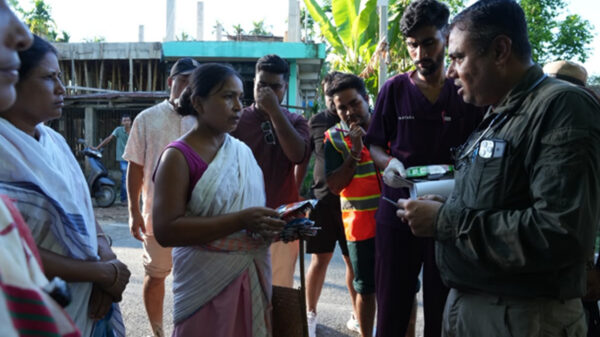
Building on this capability, the team has developed non-contact health monitoring systems capable of measuring heart rate and respiration without wearables or cameras.
Such systems are particularly useful in infectious disease wards, elderly care facilities and post-operative monitoring environments. By combining custom electronics, signal processing and edge AI, the systems extract vital signs from subtle radar reflections.
Clinical trials are currently underway, with hospital deployments planned to evaluate performance under real-world conditions.
Privacy-First Sensing for Roads
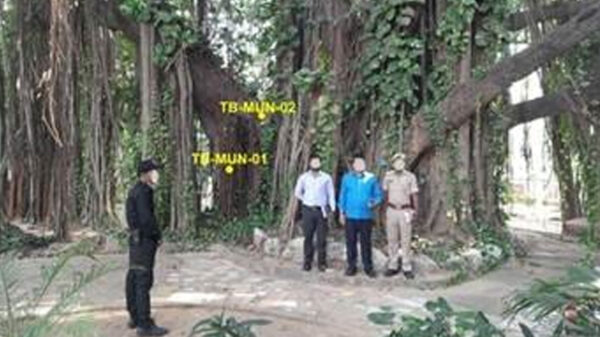
The same radar technology is being adapted for road safety and urban monitoring. In heavy rain or fog, camera-based systems often fail. Radar sensing, however, continues to function reliably.
Researchers have demonstrated systems capable of detecting and classifying vehicles, pedestrians and cyclists with high accuracy and low latency. These deployments could support traffic planning, accident analysis and smart city governance — without triggering surveillance concerns tied to camera-based infrastructure.
Systems That Shape Chips
A defining feature of the lab’s work is its feedback loop between systems and circuits. When field tests reveal issues such as signal interference or noise, those insights directly inform the next generation of chip design.
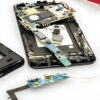
This approach has led to innovations including programmable frequency-modulated radar generators, low-noise oscillators and high-linearity receiver circuits — all tailored to real application demands rather than textbook benchmarks.
Rare High-Frequency Infrastructure
Supporting this research is a high-frequency electronics setup capable of measurements up to 44 GHz — a facility available at only a handful of institutions nationwide.
The lab has also achieved milestones including the institute’s first fully in-house chip tape-out and participation in international semiconductor design programs that expand access to advanced electronic design automation tools.
Training Full-Stack Engineers
Beyond patents, publications and technology transfers, the IC-WiBES group is training engineers fluent across the electronics stack — from transistor-level design to algorithms and deployment.
With sustained funding from multiple agencies and early-stage technology transfers underway, the lab’s work reflects a broader shift in Indian research toward application-driven electronics innovation.
Emphasising that deep-tech progress is rarely linear, Srivastava says circuits, systems and algorithms at IC-WiBES mature together.
“Sometimes hardware leads. Sometimes applications expose flaws. The key is patience, persistence and constant feedback. We are not trying to replace every component with custom silicon. Instead, we are focused on strategic intervention — designing custom chips where they matter most.”
Author