













Smart Freight Centre (SFC) India, in collaboration with The Energy and Resources Institute (TERI) and the Indian Institute of Management Bangalore (IIM-Bangalore), has released a whitepaper outlining a nationally harmonised framework to institutionalise freight emissions accounting in India.
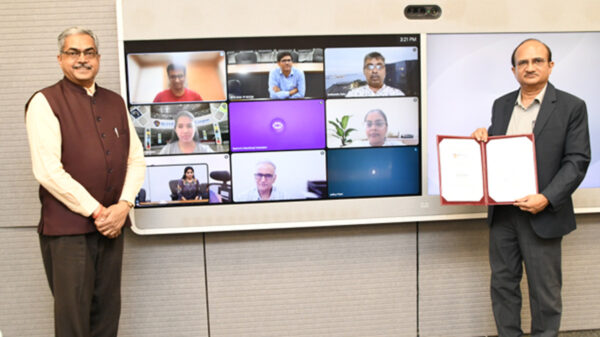
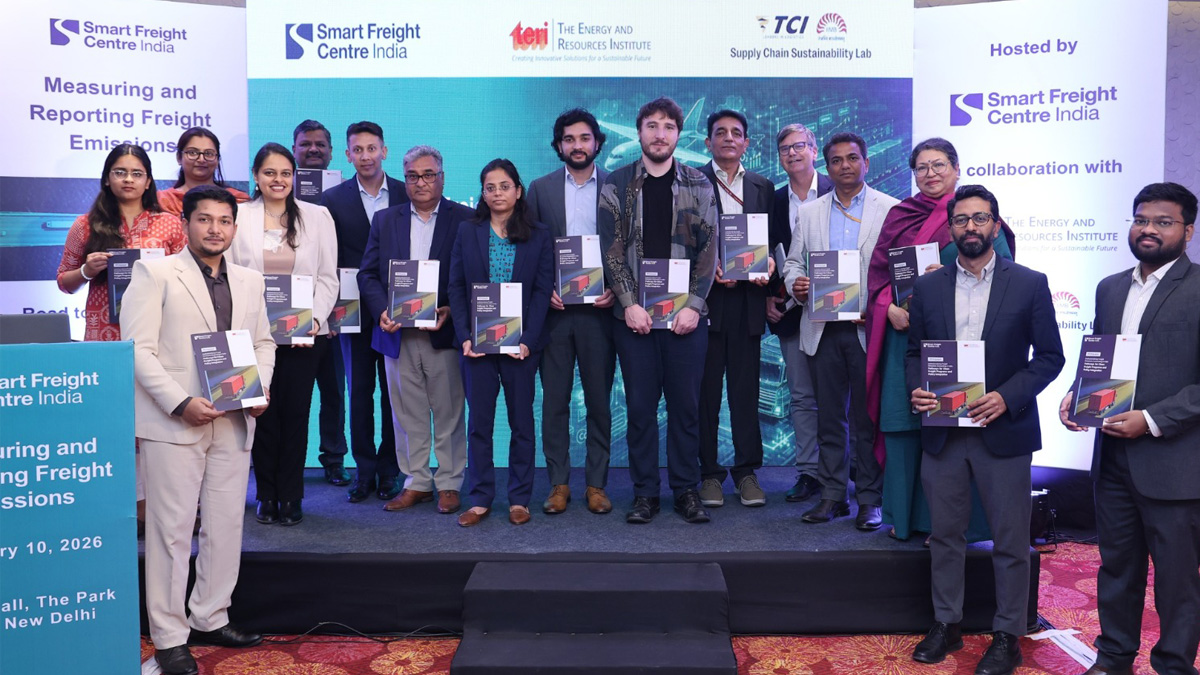
Titled Institutionalizing Freight Emissions Accounting in India: Pathways for Clean Freight Programs and Policy Integration, the whitepaper was launched at a high-level convening, “Road to Zero Emissions: Measuring and Reporting Freight Emissions,” in New Delhi.
The initiative seeks to address freight transport — one of the fastest-growing contributors to India’s transport emissions — by developing consistent, transparent, and India-relevant emissions measurement standards to support sector-wide decarbonisation.


The proposed framework aligns with ISO 14083 and the Global Logistics Emissions Council (GLEC) Framework, while incorporating India-specific emission factors and local data conditions. It lays out a roadmap for operationalising a Clean Freight Program in India, supported by multi-stakeholder governance and a digital Monitoring, Reporting, and Verification (MRV) system.
“You cannot decarbonise what you cannot measure. The development of standardised methodologies and India-specific emission factors strengthens the technical basis for informed, targeted interventions. Hence this whitepaper provides India with a practical, institution-ready blueprint to make freight emissions accounting credible, comparable, and actionable at scale,” said Deepali Thakur, Principal – Technical, Smart Freight Centre India.
TERI emphasised the role of standardised measurement in enabling effective climate action in freight.
“Measuring freight emissions is the critical first step,” said Sanjay Seth, Senior Director, Sustainable Infrastructure Programme, TERI. “Institutionalising freight emissions accounting in India, aligned with global clean freight programs can support emissions reduction, provide a credible foundation for effective decarbonisation and enable participation in emerging compliance and carbon-market mechanisms.”
From a policy standpoint, the Department for Promotion of Industry and Internal Trade (DPIIT), under the Ministry of Commerce and Industry, highlighted the integration of emissions accounting into India’s broader logistics infrastructure.
“Going ahead, freight emissions accounting will need to be integrated with other pillars of logistics infrastructure, supporting efficiency, competitiveness, and sustainability together,” said Sagar Kadu, Director (Logistics), DPIIT.
The Commission for Air Quality Management (CAQM) linked freight emissions to urban air pollution concerns.
“Freight transport is a major source of NOx, SOx, PM, and black carbon, with emissions concentrated around logistics hubs and major corridors. Addressing hotspots such as Delhi NCR can create scalable, emissions-led models for other regions facing similar PM and NOx challenges,” said Virinder Sharma, Member (Technical), CAQM.
Academic and industry collaboration was also highlighted, particularly in improving evidence-based policymaking.
“Such frameworks enable more targeted and proportionate interventions, helping policymakers focus on fleet modernisation, cleaner technologies, and zero-emission freight solutions where they are most effective,” said Aditya Gupta, COO, TCI-Supply Chain Sustainability Lab and Supply Chain Management Centre, IIM-Bangalore.
The event also marked several key launches, including India-specific Electric Vehicle emission factors developed by IIM-Bangalore and SFC, demonstrations of the Transportation Emissions Measurement Tool (TEMT), and the release of TERI’s Clean Freight Program: Baseline Study (Phase-II).
Collectively, these initiatives aim to strengthen India’s readiness for future disclosure requirements and accelerate the transition toward low- and zero-emission freight transport.
The whitepaper is publicly available through Smart Freight Centre India.
Author