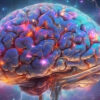






















Vision guides behaviour — but new MIT research shows that behaviour also shapes vision. A study published in Neuron reveals that the brain’s prefrontal cortex (PFC) sends finely tuned, situation-specific signals that reshape how visual information is processed. In mice, these signals vary with internal states such as arousal and whether the animal is actively moving.
“We found targeted projections for targeted impact,” says senior author Mriganka Sur of MIT’s Picower Institute. Rather than broadcasting one generic message, the PFC crafts distinct signals for different brain regions. Lead author Sofie Ährlund-Richter mapped this communication in detail, identifying which neurons receive these inputs and how the signals alter downstream processing.
Two PFC areas — the anterior cingulate area (ACA) and orbitofrontal cortex (ORB) — transmit arousal and movement information to both the primary visual cortex (VISp) and primary motor cortex (MOp). Their effects diverge: rising arousal prompts ACA to sharpen visual representations in VISp, while ORB becomes influential only at high arousal levels, reducing the clarity of strong or potentially distracting stimuli. The two regions appear to act as a regulatory pair, enhancing subtle signals while dampening overwhelming ones.


Using anatomical tracing and neural recordings in freely running mice, the researchers captured these tailored signals in action, offering a deeper view of how internal states dynamically tune sensory processing.
Author