
















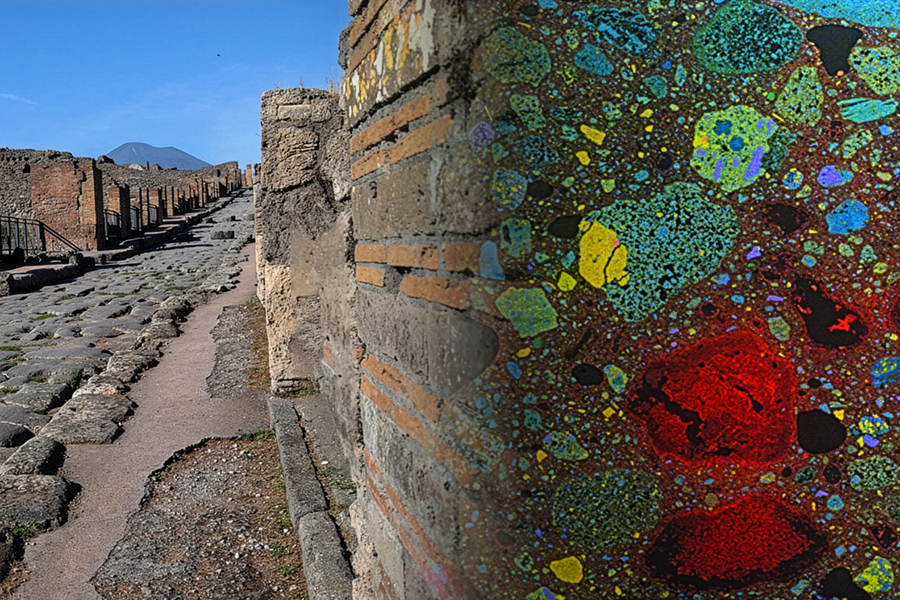
A new analysis of an ancient construction site in Pompeii has confirmed that Romans used a “hot-mixing” technique to create their famously long-lasting concrete.
Researchers led by MIT associate professor Admir Masic found that builders mixed quicklime with volcanic ash before adding water — a process that generated intense heat and preserved reactive lime clasts inside the concrete. These particles helped Roman structures heal cracks on their own, contributing to their survival for more than 2,000 years.
The discovery settles a long-standing conflict between archaeological evidence and descriptions by Roman architect Vitruvius, who wrote that lime was first mixed with water. The newly uncovered site, preserved by the 79 CE eruption of Mount Vesuvius, shows piles of dry ingredients already mixed with quicklime — confirming the hot-mixing process.


Researchers also found that volcanic materials such as pumice continued reacting over centuries, further strengthening the concrete. The findings are set to appear in Nature Communications.
Masic said understanding Roman methods could help modern engineers design more durable and sustainable concretes.
Author