













Scientists at the Massachusetts Institute of Technology (MIT) are testing a breakthrough propulsion system that combines the speed and power of conventional chemical thrusters with the precision and fuel efficiency of electric propulsion, a development that could significantly expand the capabilities of small satellites.
The innovation relies on a single “green” propellant capable of powering both chemical and electrical thrusters, eliminating the need for separate fuel systems and reducing the size and complexity of spacecraft. Researchers say the technology could enable small satellites, including CubeSats, to undertake more ambitious scientific and exploratory missions at lower costs.
The study, published in the Journal of Propulsion and Power, demonstrates that the Advanced SpaceCraft Energetic Non-Toxic (ASCENT) propellant can effectively fuel tiny electrospray thrusters in addition to chemical thrusters. ASCENT was originally developed by the U.S. Air Force as a safer alternative to hydrazine, a highly toxic fuel commonly used in space missions.


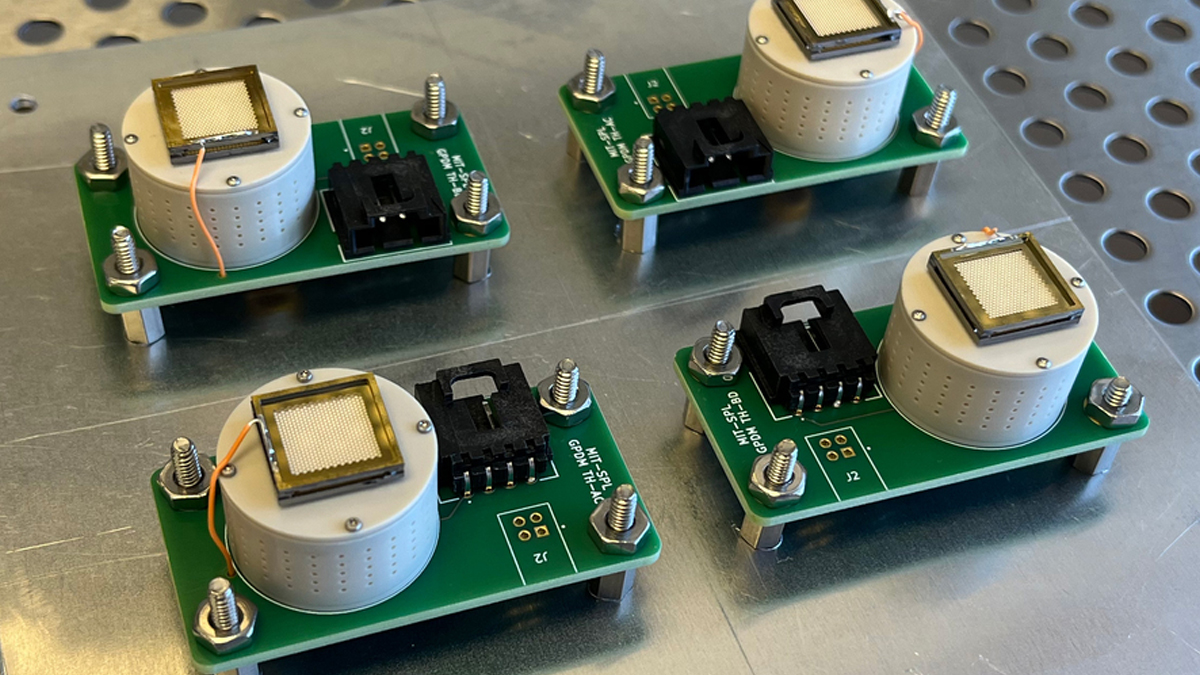
Electrospray thrusters generate thrust by using electric fields to accelerate charged particles from an ionic liquid, allowing spacecraft to perform highly precise maneuvers while consuming very little fuel. Chemical thrusters, on the other hand, provide rapid bursts of force for quick orbital adjustments and high-speed maneuvers.
“If you can have chemical and electrical propulsion in one small package, it’s the best of both worlds,” said Amelia Bruno, lead author of the study and former postdoctoral researcher in MIT’s Department of Aeronautics and Astronautics.
To test the concept, researchers fueled miniature electrospray thrusters with ASCENT and operated them inside a vacuum chamber designed to simulate space conditions. The experiments showed that ASCENT delivered performance comparable to conventional electrospray propellants, even during continuous operation lasting up to 100 hours.
The team is now collaborating with NASA on the Green Propulsion Dual Mode mission, a CubeSat scheduled for launch in November. The spacecraft will carry one chemical thruster and four electrospray thrusters powered by a single shared fuel tank—the first demonstration of its kind.
Researchers believe the technology could support future missions to Mars, the asteroid belt, and Earth-observation campaigns, offering small satellites unprecedented flexibility in how they travel and operate in space.
Author