

















Physicists at the Indian Institute of Science, in collaboration with Japan’s National Institute for Materials Science, have observed a long-sought quantum state in graphene where electrons flow like a near-perfect fluid. Reported in Nature Physics, the findings mark a major step in understanding electron behaviour under extreme quantum conditions.
Using ultra-clean graphene samples, researchers measured how the material conducts electricity and heat. Contrary to the Wiedemann-Franz law, which links the two properties, they found a dramatic divergence—electrical conductivity increased while thermal conductivity decreased, with deviations exceeding 200 times at low temperatures.
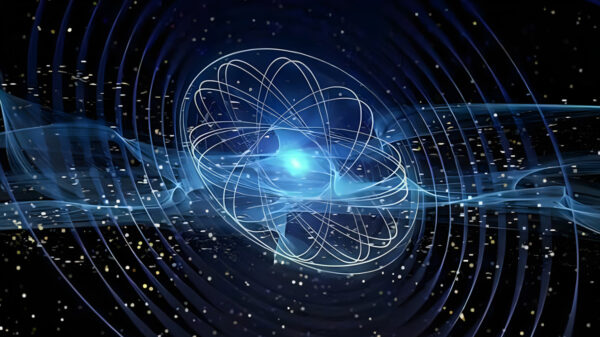
The phenomenon occurs at the “Dirac point,” where graphene transitions between metallic and insulating states. At this point, electrons behave collectively as a “Dirac fluid,” moving like a liquid with extremely low viscosity—one of the closest realisations of a perfect fluid.


The results provide a laboratory platform to explore physics typically associated with extreme environments, such as quark-gluon plasma. Beyond fundamental science, the discovery could enable advanced quantum sensors capable of detecting ultra-weak signals and magnetic fields.
Author