


















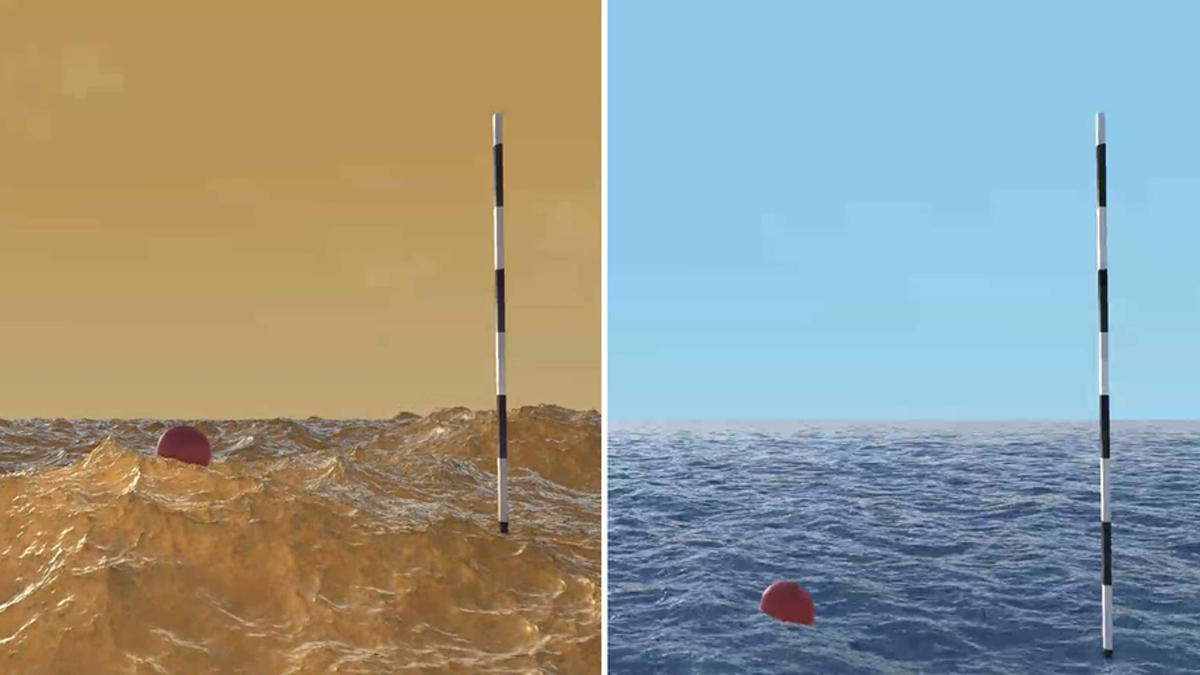
Scientists at Massachusetts Institute of Technology have developed a new model that predicts how waves behave on planets and moons with vastly different environments, offering fresh insights into extraterrestrial oceans. The model, named “PlanetWaves” and published in the Journal of Geophysical Research: Planets, is the first to simulate wave dynamics by combining gravity, atmospheric pressure, and liquid composition.
Applying the model to Saturn’s moon Titan, researchers found that even a mild breeze could generate waves up to 10 feet high due to its low gravity and hydrocarbon-based lakes. In contrast, far more extreme conditions would be needed to produce even small ripples on denser worlds, such as the lava-covered exoplanet 55-Cancri e.
The model was validated using two decades of wave data from Lake Superior on Earth before being extended to ancient Mars and multiple exoplanets.


Researchers say the findings could help guide future space missions, including the design of probes capable of navigating alien seas. More broadly, the work offers a new framework for understanding how planetary landscapes evolve, highlighting the role of waves as a shaping force beyond Earth.
Author