














India has achieved a landmark milestone in global higher education, securing 27 entries in the top 50 of the QS World University Rankings by Subject 2026. This marks the country’s strongest performance to date, more than doubling its tally from 12 entries in both 2024 and 2025, and reflecting a significant leap in global academic competitiveness.
Released on 25 March 2026, the rankings evaluated over 21,000 academic programmes across more than 1,900 universities in 100+ countries. Institutions were assessed based on key indicators such as academic and employer reputation, citations per paper, H-index, and international research collaboration.
A total of 99 Indian institutions featured this year, contributing 599 subject entries. Notably, 44% of these entries improved compared to last year, highlighting consistent and widespread progress across India’s higher education ecosystem.


The Indian Institutes of Technology (IITs) continue to lead India’s global presence, particularly in engineering and technology. IIT Delhi emerged as the country’s top performer with six subjects in the global top 50, including Electrical & Electronic Engineering (Rank 36) and Engineering & Technology (Rank 36). Other IITs such as IIT Bombay, IIT Madras, and IIT Kharagpur maintained strong positions within the top 100–200 range.
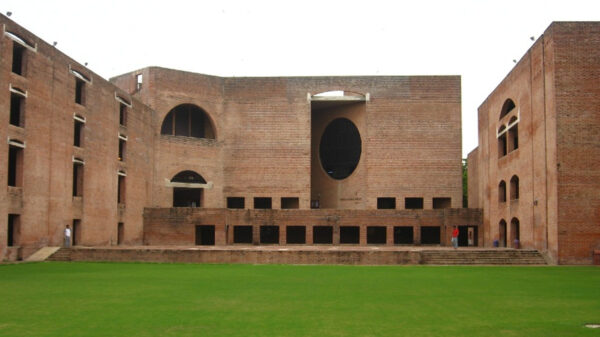
India’s highest-ranked subject globally is Mineral & Mining Engineering at ISM Dhanbad, placed 21st worldwide. In management education, IIM Ahmedabad achieved a notable feat, ranking 21st globally in both Business & Management Studies and Marketing. In the social sciences, Jawaharlal Nehru University (JNU) continued its presence among the global top 50, while BITS Pilani showcased the growing strength of private institutions.
The rankings reflect a broader diversification of excellence, spanning premier engineering institutes, management schools, social sciences institutions, and specialised universities. This shift indicates a more distributed and resilient academic landscape.
Over the past decade, India’s higher education sector has undergone a remarkable transformation from just 12 ranked institutions in 2014 to 99 in 2026. Driven by policy reforms, enhanced research output, and global collaborations aligned with the National Education Policy (NEP) 2020, India is steadily consolidating its position as a leading global knowledge hub.
Author