












Monash University and Manipal Institute of Technology (MIT), part of Manipal Academy of Higher Education, have announced a new dual-degree partnership that will allow Indian engineering students to complete part of their studies in India and finish their degree in Australia.
The programme, set to begin in August 2026, will enable eligible Bachelor of Technology students at MIT to start their studies in India before transferring to Monash University in Australia for the final two years of their degree.
Students who complete the programme will graduate with two degrees—one from MIT and one from Monash University.


According to Craig Jeffrey, Deputy Vice-Chancellor (International) and Vice-President at Monash University, the initiative reflects the university’s commitment to creating global education opportunities for future engineers.
“This dual degree partnership with Manipal Institute of Technology creates a world-class pathway for talented students in India to earn two degrees and gain a truly international engineering education,” Jeffrey said.
“By studying in both India and Australia, students will build technical capability, global networks and the confidence to work across borders in industries shaping the future, from secure digital systems to sustainable industrial processes.”
Pathway across two countries
Under the programme, students will begin their engineering studies at MIT in India. Those who meet the academic requirements will then transfer to Monash University for the final two years of their programme.
Credits will be granted for subjects completed in India, allowing students to complete their degree within the standard timeframe. The partnership will offer up to 60 transfer places to Monash each year.
The collaboration will initially offer dual degrees in software engineering and chemical engineering.
Focus on future engineering skills
For chemical engineering students, the Monash curriculum will include advanced study in process design, reaction engineering, process control and particle technology, alongside project-based learning focused on real-world industrial applications.
Rajendran Partiban, Deputy Dean (Education) at Monash’s Faculty of Engineering, said the programme aligns with growing global demand for engineers capable of supporting sustainable technologies and advanced manufacturing.
“Chemical engineers play a vital role in tackling global challenges, from clean technologies to safer, more sustainable industrial systems,” Partiban said.
“This dual degree partnership will provide students with rigorous technical foundations, practical design experience and exposure to world-leading engineering education in Australia.”
In the software engineering pathway, students will study topics such as software security, operating systems, cloud computing and software architecture, while also gaining experience in designing and developing AI-enabled systems.
Jean-Guy Schneider, Deputy Dean (Education) at Monash’s Faculty of Information Technology, said the programme will prepare graduates for modern digital engineering challenges.
“Software engineering today is about building systems that are secure, reliable and designed for real-world complexity,” Schneider said.
“Through this dual degree, students will graduate with strong foundations in software architecture, cybersecurity and modern computing, along with the skills to design and deploy AI-enabled software systems responsibly.”
Expanding global collaboration
Speaking on the collaboration, Anil Rana, Director of MIT, said the partnership will help prepare Indian engineers to contribute both globally and locally.
“We are thrilled to partner with Monash University and offer our students the opportunity to learn across two countries while maintaining quality and consistency in education,” Rana said.
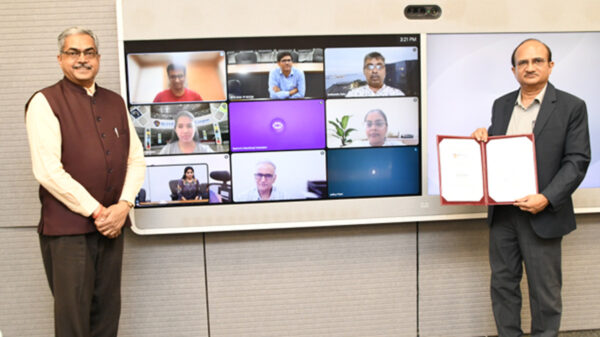
The partnership is based on a formal agreement between the two institutions that outlines the academic structure of the programme, credit transfer arrangements and student support systems.
Students will be required to meet Monash admission requirements as well as Australian student visa eligibility criteria before transferring to Australia.
The agreement also builds on Monash University’s existing engagement with India, including its collaboration with the IITB-Monash Research Academy and partnerships with Indian universities in areas such as health, sustainable housing, energy, transport and artificial intelligence.
The new programme was supported by funding from the Yes to International Students Fund, an initiative of the Victorian Government aimed at strengthening global education partnerships.
Author