














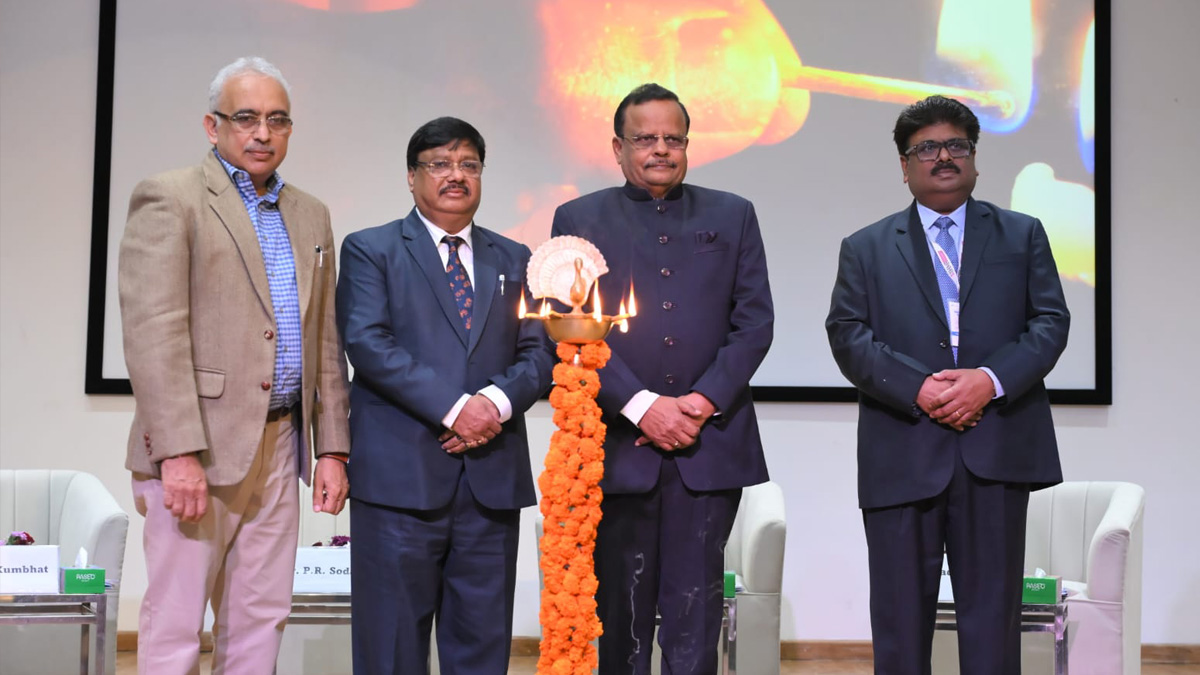
The latest edition of the Global Health Management Research Conference at IIHMR University placed artificial intelligence at the centre of discussion, examining not only its technological promise but also the policy, ethical, and infrastructural shifts required for meaningful impact. The two-day meeting brought together speakers and participants from organisations including PwC, Narayana Health, Sandoz, Novo Nordisk, Wadhwani AI, and the Population Council.
Discussions unfolded across thematic tracks ranging from community health and behavioural science to ESG measurement, pharmaceutical commercial strategy, sustainable development, and predictive population health models. Much of the conversation focused on India’s accelerating shift toward data-driven healthcare—telemedicine expansion, digital health records, AI-enabled diagnostics, and analytics-informed policymaking.
P. R. Sodani framed the theme as both urgent and broad in scope. “AI for Global Health is an important and timely theme for our two-day annual conference,” he said, referencing the Prime Minister’s proposed MANAV framework—moral and ethical, accountable governance, national sovereignty, accessible and inclusive, and value-based—to argue for an equity-focused approach to AI adoption.


The conference opened with an address by Pramod Yeole, who emphasised interdisciplinary collaboration and Rajasthan’s potential as a testbed for implementation research. “AI-driven models can support material and training programs for non-communicable disease screening, supply chain forecasting, diagnosis, and insurance fraud detection,” he noted.
Arun Kumbhat added perspectives on developing scalable digital ecosystems.
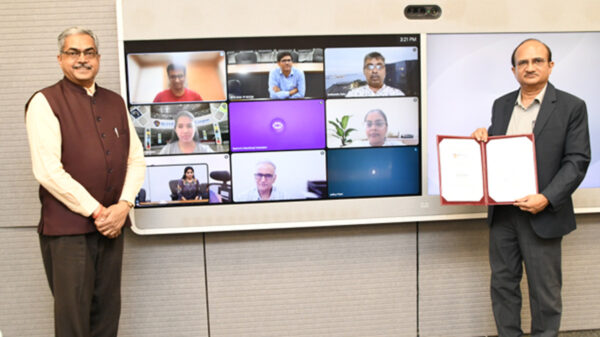
IIHMR University also used the event to formalise new partnerships, signing multiple Memoranda of Understanding with institutions working in global health management research and digital innovation—an indication of its intent to strengthen collaborative capacity-building.
The valedictory session featured Ranjit Singh as Chief Guest. He underscored the importance of human-centric practice in an increasingly technology-driven health sector, urging students to prioritise dignity and community service.
According to Himadri Sinha, the conference saw participation from more than 400 attendees, 20 invited speakers, and the signing of 10 MoUs. He presented the final conference report, closing an event that positioned AI as both a tool and a lens for rethinking health systems.
Author