

















As artificial intelligence reshapes the legal profession, legal experts have urged aspiring lawyers to view AI as an enabler rather than a replacement, stressing that qualities such as ethical judgment, empathy and critical thinking will remain central to the practice of law.
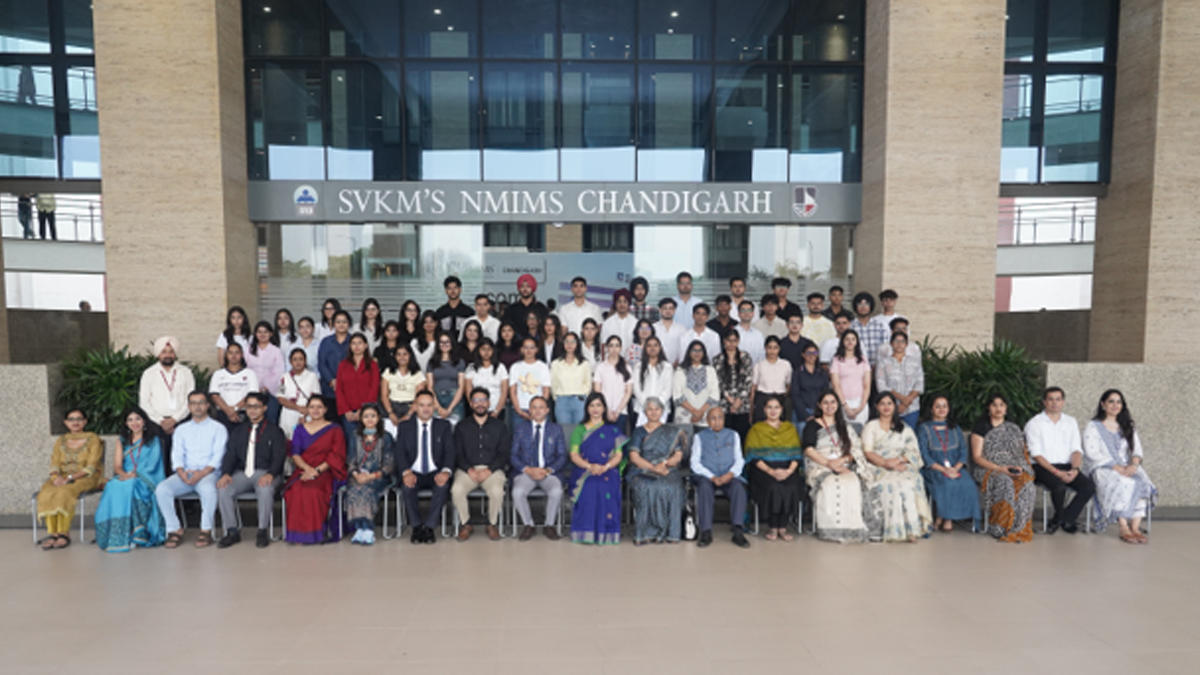
The message was shared during the orientation programme for the 2026–31 batch of BA LL.B. (Hons.) and BBA LL.B. (Hons.) students at SVKM’s NMIMS Chandigarh School of Law, where academicians and legal professionals encouraged students to embrace technological advancements while building strong legal foundations and human-centred skills.
Addressing the students, Prof. (Dr.) Jyotsna Singh, Campus Director, NMIMS Chandigarh, said AI has become a valuable tool capable of preparing case summaries, analysing legal documents and drafting contracts. However, she emphasised that technology cannot replicate compassion, wisdom or ethical decision-making. She encouraged students to cultivate critical thinking, integrity and empathy alongside technological competence, while making the most of academic, co-curricular and experiential learning opportunities during their five-year programme.
Echoing these views, Prof. (Dr.) Balram K. Gupta, Professor Emeritus, Senior Advocate and former Director of the National Judicial Academy, India, inspired students through anecdotes from the lives of renowned legal luminaries. He urged them to strengthen their communication skills, remain resilient and embrace lifelong learning, noting that character and perseverance continue to define successful legal professionals.
Dr. Nandan Sharma, Associate Dean of the School of Law, highlighted the importance of internships, moot courts, legal aid initiatives, research and interdisciplinary learning. He observed that success in the legal profession depends not only on legal knowledge but also on humility, respect and a commitment to continuous learning.
The orientation also featured an expert session by Bhasker Sharma, Managing Director of PatentsKart, who discussed the growing convergence of law, artificial intelligence, intellectual property and innovation. He encouraged students to explore emerging legal domains while sharpening analytical and problem-solving skills that will remain valuable in an AI-driven future.
The programme marked the beginning of the academic journey for the new law students, reinforcing NMIMS Chandigarh’s commitment to experiential learning, industry engagement and producing legal professionals equipped with both technological awareness and strong ethical values.
Author