



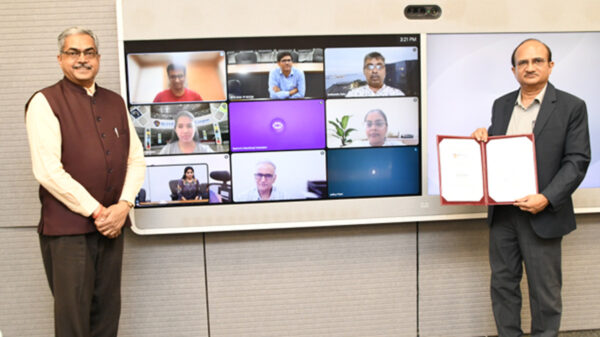





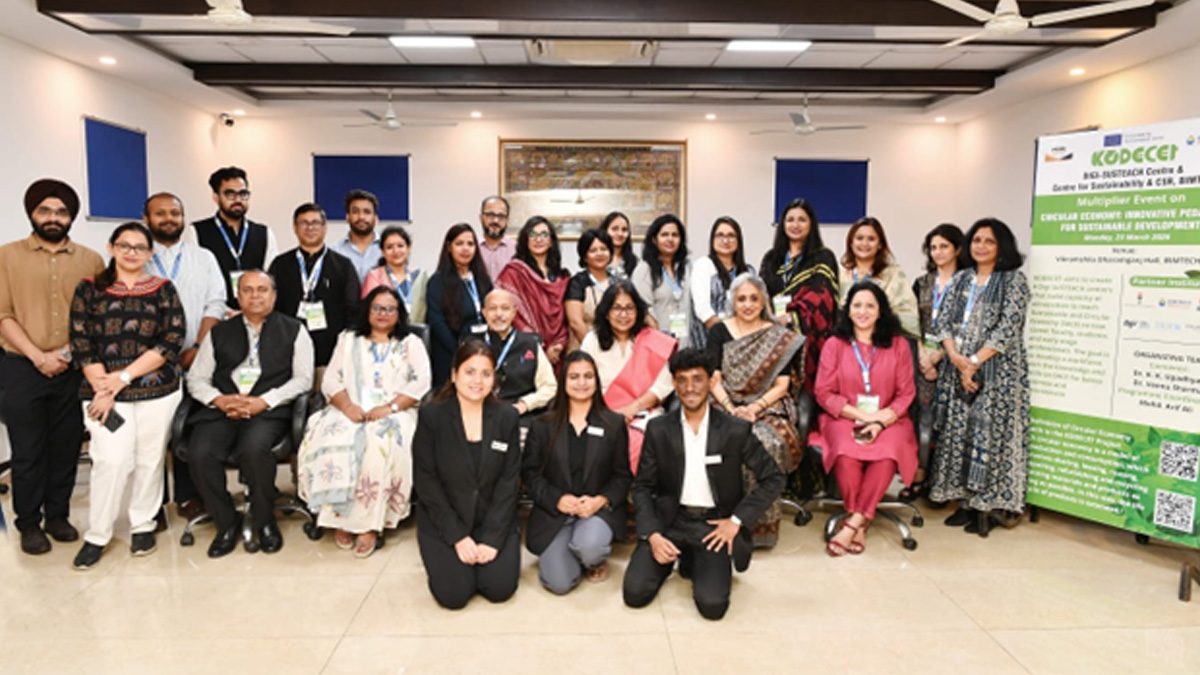
Birla Institute of Management Technology (BIMTECH), Greater Noida, successfully hosted two regional multiplier events under the Erasmus+-funded KODECET (Knowledge Development for Circular Economy Transition) project, reinforcing the growing importance of circular economy education in higher learning. The initiative brought together a diverse group of stakeholders, including academic leaders, faculty members, CSR professionals, sustainability practitioners, and industry representatives, to collaboratively explore innovative approaches to integrating sustainability into education systems.
The event emphasized the alignment of circular economy pedagogy with Sustainable Development Goal 4 (Quality Education), focusing on preparing students for future challenges through responsible and impact-driven learning. Addressing the gathering, Director Dr. Prabina Rajib highlighted the evolving purpose of higher education, stressing that academic institutions must go beyond traditional teaching and equip students to contribute meaningfully to sustainable systems and societal transformation.
A central feature of the event was the introduction of the KODECET three-course framework, designed to provide a structured pathway for circular economy education. The framework is organized into three components: conceptual understanding (“What & Why”), practical implementation (“How”), and collaborative leadership involving stakeholders (“With Whom”). This approach aims to move sustainability education from fragmented modules to a cohesive and industry-relevant curriculum.
Dr. Veenu Sharma, National Lead for KODECET, underscored the need for structured curriculum design, while Dr. K.K. Upadhyay emphasized the increasing demand for professionals capable of translating sustainability principles into real-world business practices. The discussions highlighted the importance of stronger collaboration between academia and industry to bridge the skills gap.
Participants engaged in interactive sessions featuring case-based learning, discussions, and experiential tools such as the CIRCULA game, enabling practical application of theoretical concepts. Industry attendees appreciated the focus on emerging areas like ESG reporting, carbon accounting, and sustainable supply chains, noting their relevance in today’s corporate landscape.
The event concluded with a shared consensus on the need for continuous faculty development and institutional support to scale circular economy education. By fostering collaboration and innovation, BIMTECH reaffirmed its commitment to shaping future-ready graduates equipped to address global sustainability challenges and drive the transition toward a circular and regenerative economy.
Author