



















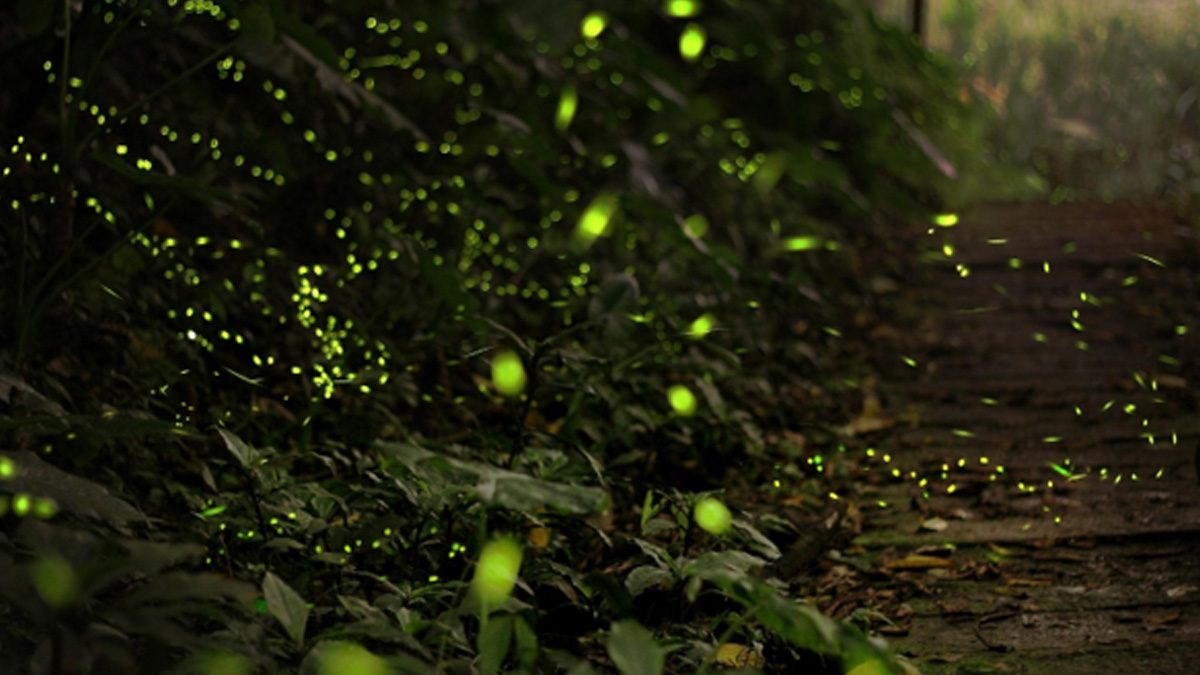
Fireflies are famous for lighting up summer nights, but their glow is more than just beautiful—it’s one of nature’s most efficient lighting systems. While a traditional incandescent light bulb converts only about 10% of its electrical energy into visible light, wasting the remaining 90% as heat, a firefly produces light with nearly 100% efficiency. This remarkable process, known as bioluminescence, generates almost no heat, making it one of the most energy-efficient natural reactions ever discovered.
The glow is produced through a chemical reaction involving a molecule called luciferin, an enzyme called luciferase, oxygen and a small amount of chemical energy from ATP, the cell’s energy currency. When these substances react inside specialised light-producing organs in the firefly’s abdomen, they release energy almost entirely as visible light instead of heat. Scientists call this “cold light.”
This extraordinary efficiency is essential for the insect’s survival. If fireflies generated as much heat as conventional light bulbs, their tiny bodies would quickly overheat and die. Instead, they can flash repeatedly to attract mates, communicate and even warn predators without wasting energy.


Author