


















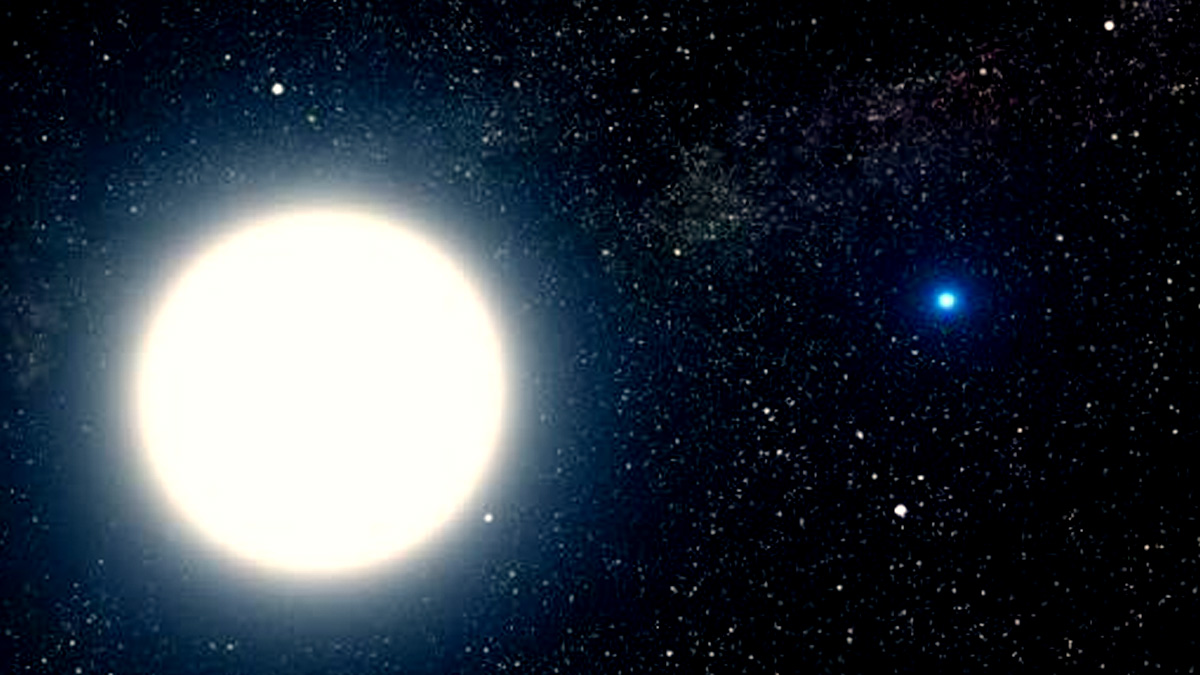
Astronomers have identified two unusually low-density planets that are roughly the size of Jupiter but contain less than six per cent of its mass, making them among the puffiest planets known in the galaxy.
The two “superpuff” planets orbit TOI 791, a Sun-like star located about 1,113 light-years from Earth. Their extremely low densities are comparable to that of cotton candy or shaving foam, according to the researchers.
The discovery was made using NASA’s Transiting Exoplanet Survey Satellite (TESS), which detected the planets as they passed in front of their host star and caused a small dip in its brightness. These transits allowed astronomers to determine the size of the planets.

One of the planets is approximately 0.993 times the width of Jupiter, while the other is about 1.155 times as wide. However, determining their masses required observations of the planets’ gravitational interactions.
As the two planets orbit TOI 791, they periodically exert small gravitational pulls on each other. By tracking changes in their orbital motion over several years, researchers were able to estimate their masses.
Observations from the Antarctic Search for Transiting ExoPlanets (ASTEP) telescope played a crucial role in the study. Each planet takes around 12 hours to transit its star, making continuous observations difficult from most locations on Earth. Antarctica’s extended periods of darkness provided the conditions needed to observe the complete transits.
The researchers estimated that one planet has a mass about 9.5 times that of Earth, while the other is approximately 18.6 times as massive. Their calculated densities are just 0.038 and 0.047 grams per cubic centimetre respectively. By comparison, cotton candy has a typical density of around 0.05 grams per cubic centimetre.
The findings, published in the Monthly Notices of the Royal Astronomical Society, add to the small and unusual population of large but extremely low-density worlds known as superpuffs.
How do superpuff planets form?
Astronomers are still uncertain about how such planets acquire their enormous sizes despite having relatively little mass. One possibility is that they form farther away from their host stars before migrating inward. As they approach the star, their atmospheres could heat up and expand, causing the planets to become unusually large and “puffy.”
Another proposed explanation is the presence of extensive ring systems, which could make a planet appear larger during a transit. However, researchers say this is unlikely to explain the newly discovered pair, particularly because two ringed planets orbiting the same star would be an improbable coincidence.
The host star’s rapid rotation may also indicate that it is relatively young. If so, the planets could still be cooling and contracting, meaning astronomers may be observing them at an intermediate stage of their evolution.
Researchers plan to study the planets further using the James Webb Space Telescope (JWST). Analysing their atmospheres and chemical composition could provide clues about how these unusual worlds formed and evolved.
The discovery of such rare planets could help astronomers better understand the diversity of planetary systems and the processes that shape planets over time. Studying these extreme worlds may also offer a broader perspective on how planets, including Earth, fit into the evolution of planetary systems across the universe.
Author