

















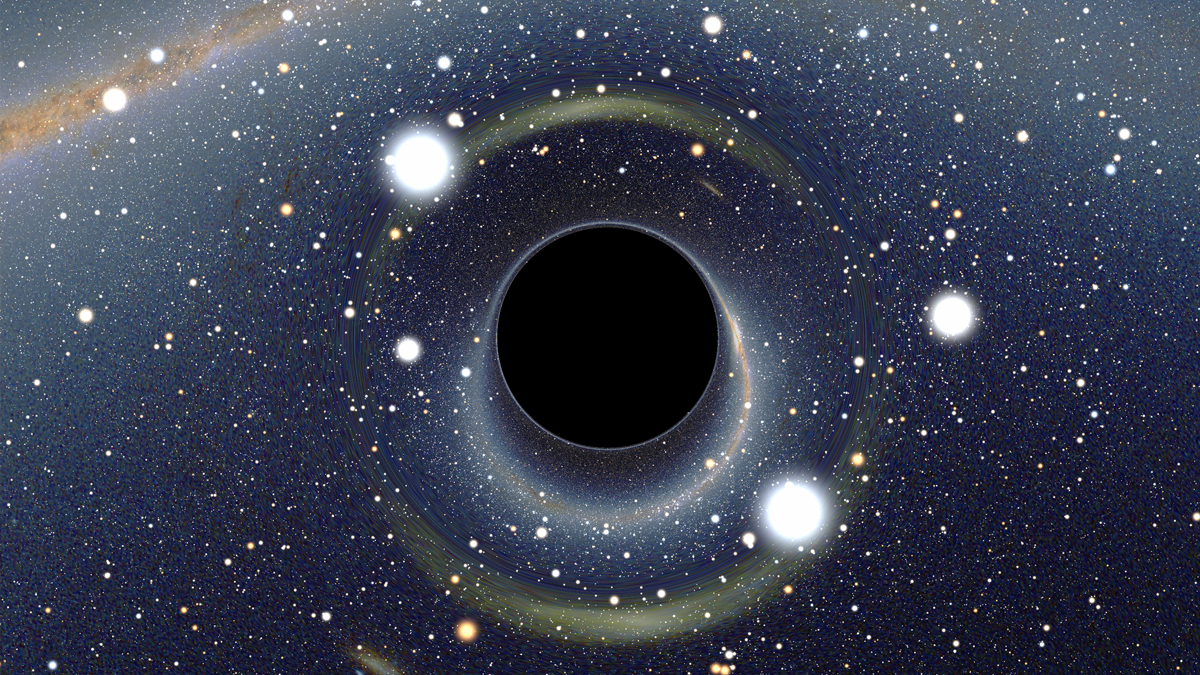
A new study by researchers at the Indian Institute of Astrophysics, Bengaluru, has investigated whether dwarf spheroidal galaxies—among the smallest and faintest galaxies—can host central black holes, offering insights into how black holes form and evolve.
Unlike large galaxies, where supermassive black holes are routinely observed, dwarf spheroidal galaxies are gas-poor and dominated by dark matter, making detection extremely difficult. To address this, researchers developed detailed dynamical models incorporating stars, dark matter, and a potential central black hole, using stellar motion data to estimate mass constraints.
Published in The Astrophysical Journal, the study finds that these galaxies could host intermediate-mass black holes, typically below one million solar masses. The results also extend the established relationship between black hole mass and stellar velocity dispersion across a wide range of galaxy sizes, suggesting a unified scaling law.

The findings provide a framework for future observations with next-generation telescopes, including the proposed National Large Optical Telescope and the Extremely Large Telescope. By probing these faint systems, scientists hope to better understand the earliest black hole “seeds” and their role in cosmic evolution.
Author