
















A groundbreaking computer-based design framework developed by researchers at the Massachusetts Institute of Technology (MIT) could transform the future of construction by enabling buildings and bridges to use significantly less material while remaining practical to build.
The new approach addresses a long-standing challenge in the construction industry: balancing structural efficiency, sustainability, and real-world constructability. Researchers say the innovation could help reduce the carbon footprint of construction, a sector responsible for more than seven percent of global carbon emissions through the production of building materials.
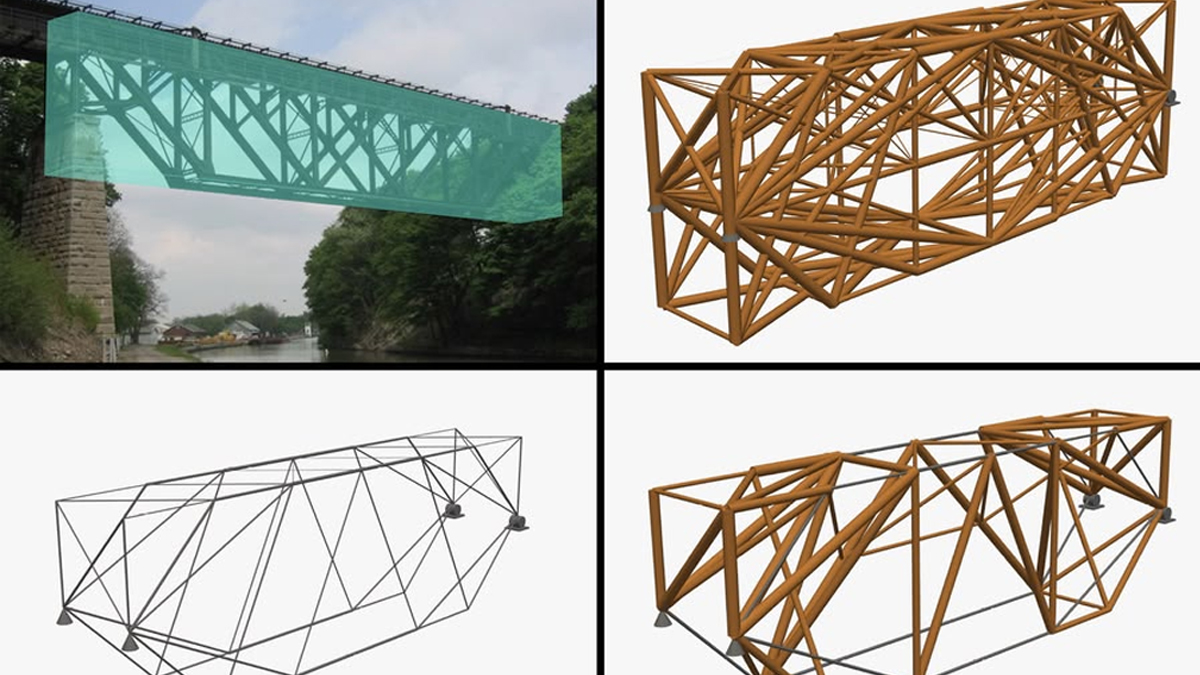
The study, published in the journal Automation in Construction, enhances a technique known as topology optimization, which uses computer algorithms to determine the most efficient distribution of materials within a structure. While topology optimization can reduce material usage by as much as 90 percent, its highly complex designs have largely remained confined to research laboratories due to difficulties in construction.

MIT researchers have now developed a framework that makes these optimized designs more practical for real-world projects. The system allows engineers to apply construction-related constraints, such as limiting the number of structural components meeting at a single point and controlling the minimum size of parts. This results in designs that are easier and more cost-effective to build.
The framework also introduces the ability to design structures using multiple materials, including steel and timber, while considering each material’s strength, availability, and environmental impact. By intelligently distributing loads and optimizing material selection, the approach can further improve sustainability outcomes.
Senior researcher Josephine Carstensen, MIT’s Gilbert W. Winslow Career Development Professor in Civil Engineering, said the key challenge was addressing the relationship between material choice, constructability, and structural optimization simultaneously. Lead author and doctoral researcher Zane Schemmer noted that future sustainable construction will depend not only on using fewer materials but also on selecting the right materials for specific locations and carbon reduction goals.
Researchers demonstrated the framework by designing steel, wood, and hybrid truss structures for buildings and bridges. The results showed that carbon emissions varied significantly depending on the design constraints applied.
The team believes the innovation could bridge the gap between theoretical optimization and practical construction, paving the way for more sustainable infrastructure worldwide.
Author