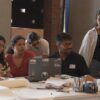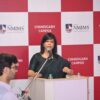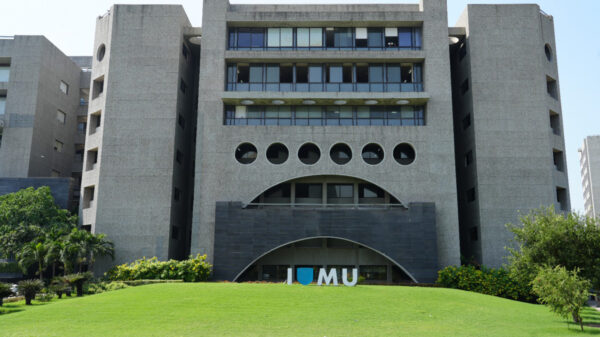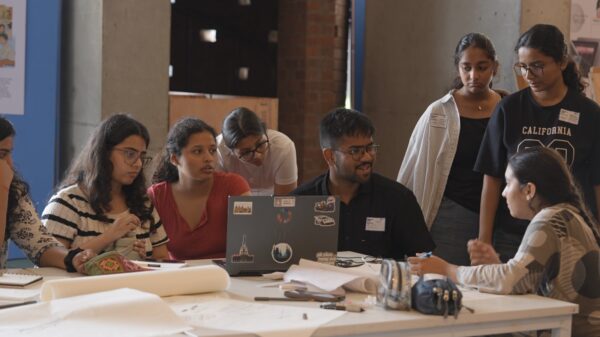

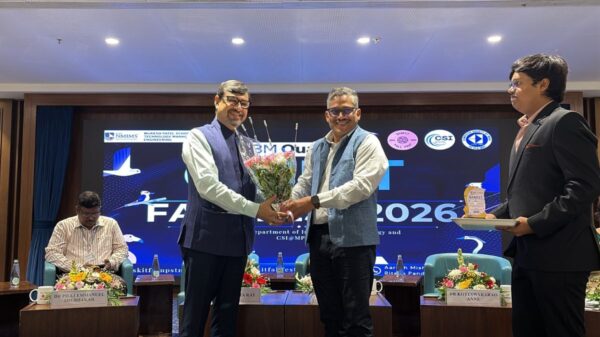







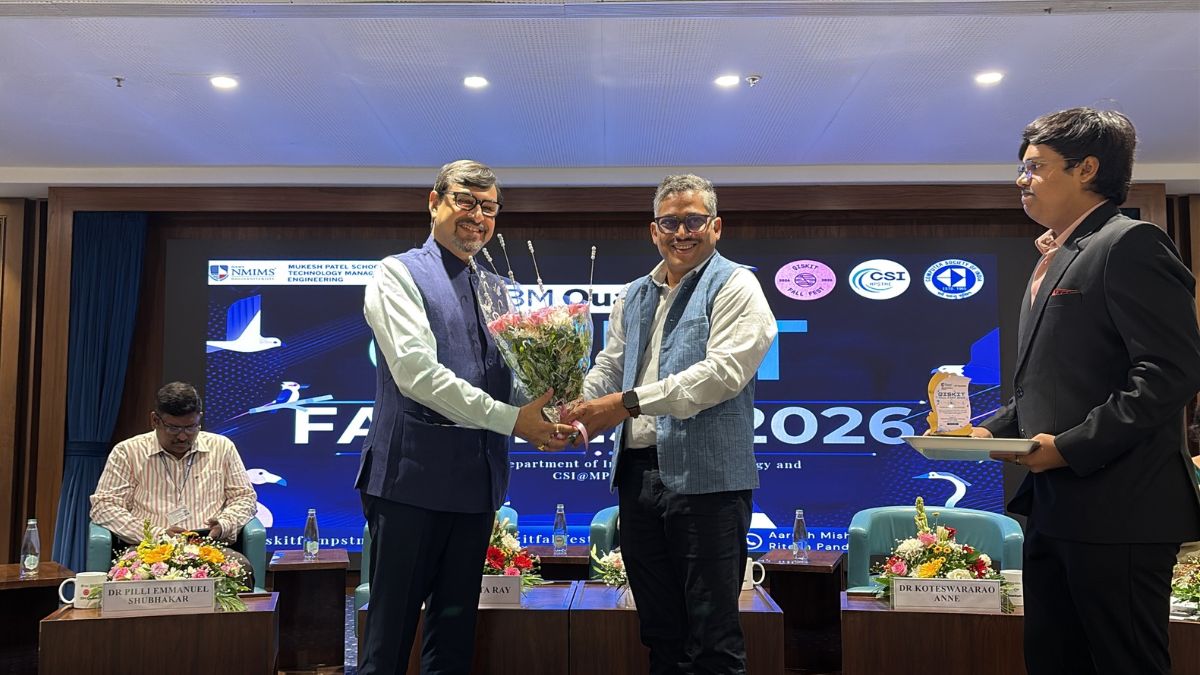
More than 300 registrations were received for Qiskit Fall Fest 2026, hosted by the Mukesh Patel School of Technology Management and Engineering (MPSTME) at SVKM’s NMIMS in Mumbai on October 24. The event brought students, researchers, academicians and industry professionals together for sessions and hands-on activities focused on quantum computing.
Organised by MPSTME’s Department of Information Technology in collaboration with the Computer Society of India chapter at the institution, the event was part of IBM Quantum’s global Qiskit Fall Fest initiative. The programme included expert talks and a quantum computing hackathon, giving participants an opportunity to explore programming tools and apply concepts to practical problems.
The sessions covered advances in quantum technology, qubit realisation, quantum algorithms, Qiskit programming, Java–Qiskit integration, Quantum AI and challenges in quantum machine learning.

Speakers included B. K. Murty, former Scientist-G at the Ministry of Electronics and Information Technology; Pilli Emmanuel Shubhakar, Associate Dean at MNIT Jaipur; Aswath Babu; Sathyaprakash Palaniyappan, Co-founder and COO of Anuthantra; Mukta Nivelkar, Assistant Professor at FCRIT, Vashi; and Jay Shah, Senior Quantum Machine Learning Researcher at BQP and founder of QRL.
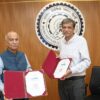
Prof. Sougata Ray, Vice Chancellor of SVKM’s NMIMS, attended the event. It was conducted under the guidance of Koteswararao Anne, Dean of MPSTME, and Ashwini Rao, Head of the Department of Information Technology. Bhavna Bose, a Tier 2 Qiskit Advocate and IBM Certified Qiskit Developer, was also involved in coordinating the programme.
Why Quantum Computing Skills Matter
Quantum computing uses principles of quantum physics to process information. Unlike conventional computers, which represent information using bits with values of either zero or one, quantum computers use quantum bits, or qubits, which can exist in combinations of these states. Researchers are investigating whether quantum systems can offer advantages in areas such as materials science, chemistry and certain complex computational problems.
Programming tools such as Qiskit allow users to construct quantum circuits, run simulations and work with quantum computing systems. Practical training can help students understand the principles behind these technologies and develop programming skills relevant to research and development.
India is also investing in this field through the National Quantum Mission, approved in April 2023 with an outlay of ₹6,003.65 crore for eight years, from 2023–24 to 2030–31. The mission supports research and development across quantum computing, quantum communication, quantum sensing and metrology, and quantum materials and devices. It also aims to strengthen research infrastructure, industry participation and the availability of skilled personnel. Four thematic hubs have been established under the mission to advance work in these areas.
Qiskit Fall Fest is designed to expand participation in quantum computing through community-led university events, workshops, coding challenges, research talks and hackathons. IBM Quantum supports student organisers and volunteers in planning these activities.
NMIMS Expands Quantum Computing Training
According to the institution, MPSTME is strengthening its engagement with quantum computing through faculty development, professional certifications, hands-on training and academic activities.
The October 24 event brought these efforts together through technical sessions and a hackathon. While the programme offered participants exposure to emerging tools and research topics, the press release did not provide details on the hackathon’s projects, winning teams or outcomes. The event reflects a broader need to connect academic learning with practical experience as universities and research institutions work to develop expertise in emerging technologies.
Author