















A groundbreaking high-resolution radio survey has uncovered a hidden population of faintly active supermassive black holes in nearby galaxies, offering astronomers fresh insights into how galaxies evolve over time. The discovery, made by an international team of researchers that includes Dr. Aru Beri from the Indian Institute of Astrophysics (IIA), reveals that many black holes previously thought to be dormant are quietly influencing their cosmic surroundings.
The findings, published in the Monthly Notices of the Royal Astronomical Society, suggest that weakly active black holes may be far more common than previously believed and could represent the dominant mode of black hole growth in the present day Universe.
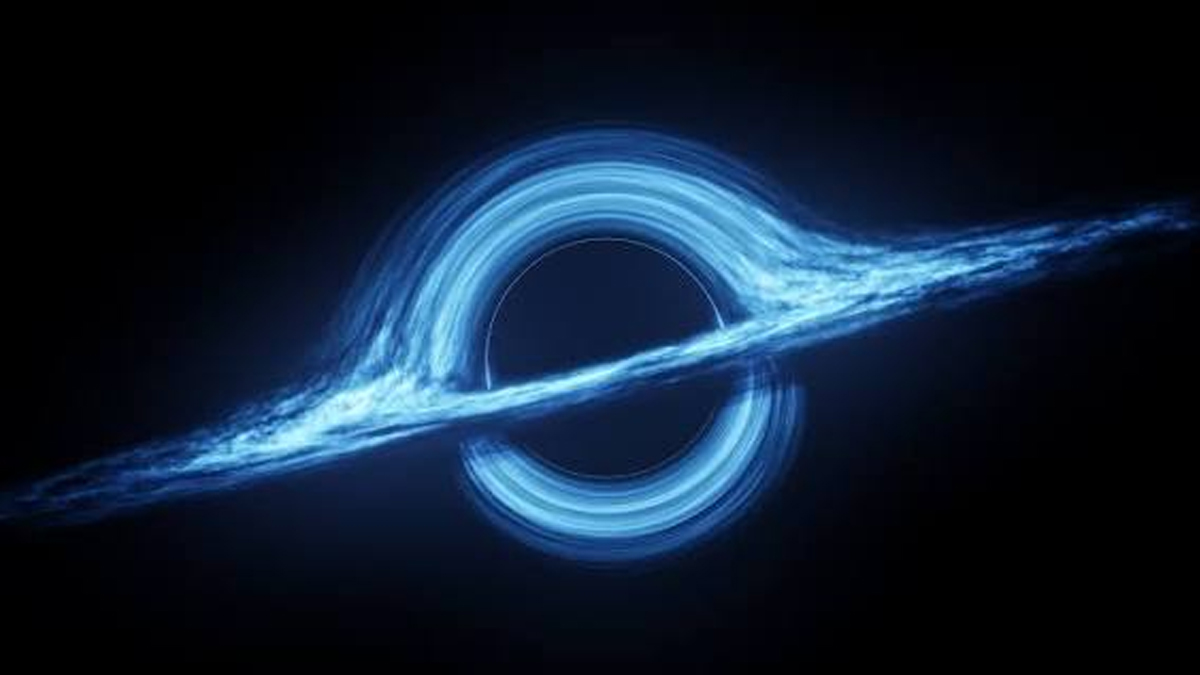
Astronomers have long known that nearly every galaxy hosts a supermassive black hole at its centre. While some black holes actively consume surrounding matter and emit enormous amounts of radiation, many remain extremely faint, making them difficult to detect with conventional telescopes.

These weakly feeding black holes are particularly important because, despite their low activity, they can still release energy through powerful jets and outflows. This energy influences the gas and dust within galaxies, regulates the formation of new stars, and ultimately shapes the long-term evolution of galaxies.
However, identifying these faint black holes has remained one of the biggest challenges in modern astronomy.
To address this challenge, researchers used the enhanced Multi-Element Radio Linked Interferometer Network (e-MERLIN), one of the world’s most advanced radio telescope arrays, to observe 280 nearby galaxies selected from the well-known Palomar sample.
Unlike conventional observations, e-MERLIN provides extremely high angular resolution, allowing astronomers to study the central regions of galaxies on parsec scales distances equivalent to just a few light-years around their central black holes.
The observations detected compact radio emissions from the centres of nearly one-quarter of the surveyed galaxies. These radio signals indicate the presence of weakly accreting supermassive black holes that had previously gone unnoticed.
Most of the detected sources appeared highly compact, suggesting activity confined to the immediate surroundings of the black hole. A smaller number displayed jet-like radio structures extending across several parsecs, evidence that even these faint black holes can produce energetic outflows.
The survey represents one of the first statistically complete, high-resolution radio studies specifically designed to isolate faint black hole activity in nearby galaxies.
Previous surveys often faced two major limitations. Either they lacked the sensitivity and resolution needed to distinguish weak black hole emissions from surrounding stellar activity, or they examined relatively small galaxy samples that could introduce observational bias.
By combining a large, carefully selected sample with exceptionally detailed radio imaging, the researchers were able to conduct one of the most comprehensive searches yet for low-level black hole activity in ordinary galaxies.
To ensure that the detected radio emissions truly originated from actively growing black holes, the team complemented their radio observations with X-ray data collected by NASA’s Chandra X-ray Observatory.
The combined radio and X-ray analysis allowed researchers to rule out alternative explanations such as star formation, supernova remnants, or X-ray binary systems, confirming that the observed emissions were indeed produced by actively accreting supermassive black holes.
This multi-wavelength approach significantly strengthens the reliability of the findings and demonstrates the value of combining different observational techniques to study the Universe.
One of the study’s most significant conclusions is that faint, low-level activity may actually represent the most common way supermassive black holes grow in the modern Universe.
Rather than undergoing dramatic bursts of activity throughout their lifetime, many black holes may spend most of their existence quietly accumulating matter while continuously influencing the galaxies around them.
These findings also highlight the crucial role of high-resolution radio astronomy in uncovering black hole populations that remain invisible to conventional galaxy surveys.
As next-generation observatories become operational, astronomers expect to discover even larger populations of these hidden black holes, offering a deeper understanding of how galaxies and their central black holes have evolved across cosmic history.
The research was led by D. R. A. Williams-Baldwin and an international team of collaborators, including Dr. Aru Beri, faculty member at the Indian Institute of Astrophysics, an autonomous institution under the Department of Science and Technology (DST), Government of India.
Author