



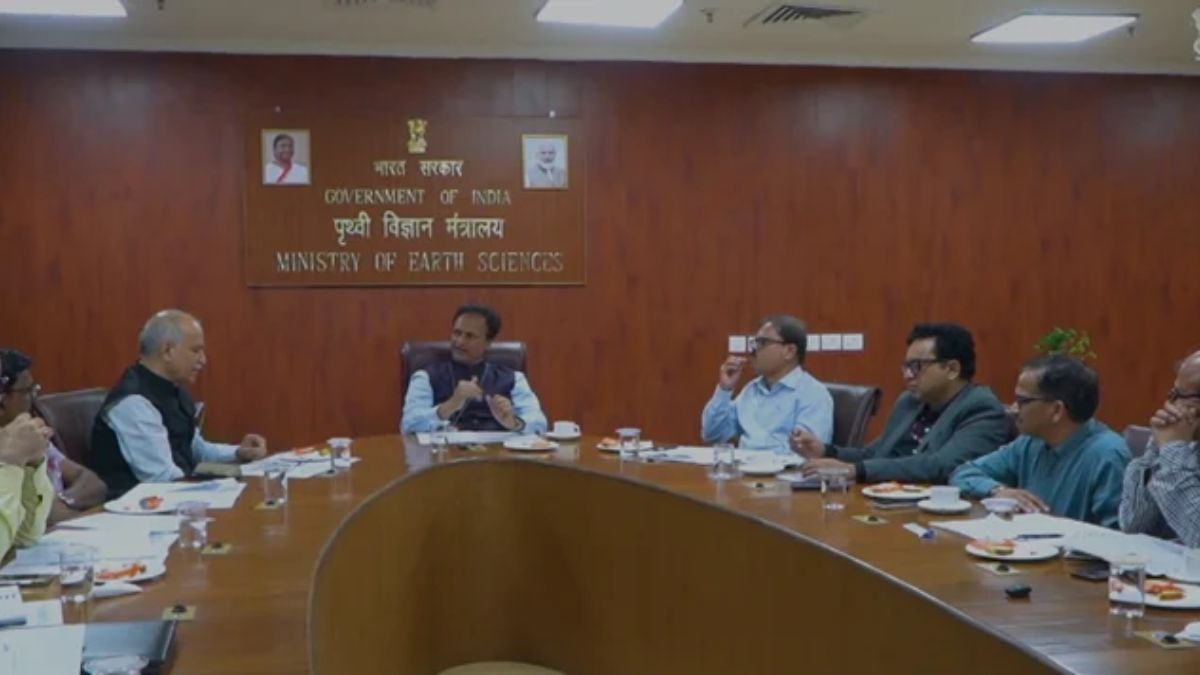
From climate modelling and weather forecasting to marine robotics and earthquake risk assessment, the collaboration connects doctoral researchers with specialised scientific institutions across India. Applications for AcSIR’s January 2027 admission session close on October 31.
India’s Ministry of Earth Sciences (MoES) and the Academy of Scientific and Innovative Research (AcSIR) have established a framework for doctoral research across ten national research institutes, bringing specialised scientific facilities and academic supervision together under a common PhD programme.
The partnership recognises all ten MoES institutes as AcSIR Associated Research Institutes (AcSIR-ARIs). Students selected through AcSIR’s PhD programme will undertake research at the participating institutes under the supervision of MoES scientists recognised as AcSIR faculty. AcSIR will award the doctoral degrees, with the name of the host research institute included on the degree certificate.

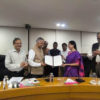
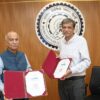
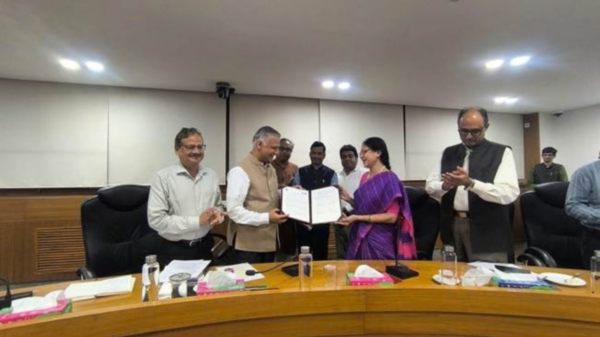
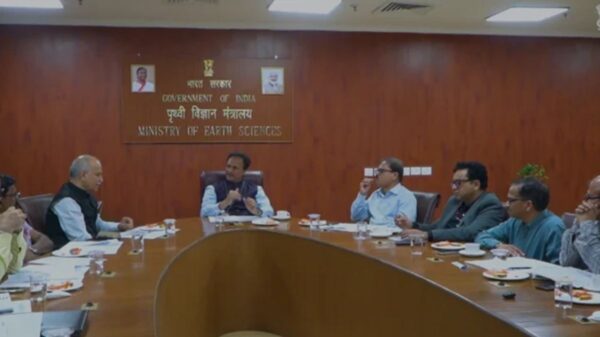
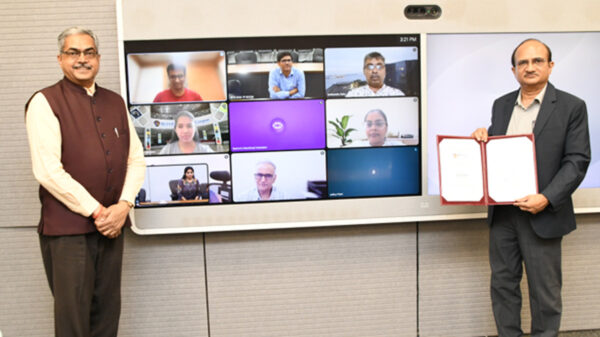
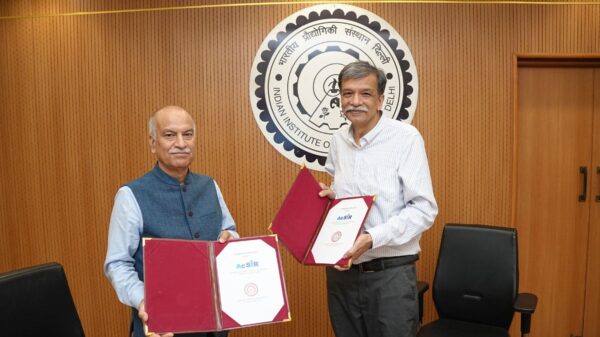
The ministry announced the partnership on October 19, following a formal declaration ceremony held on October 13 at Prithvi Bhawan headquarters in New Delhi. The memorandum of understanding (MoU) had been executed on August 21, 2026.
The arrangement covers research areas ranging from atmospheric and ocean sciences to polar research, hydrology and applications of artificial intelligence in Earth sciences. It also establishes a framework for sharing research infrastructure, strengthening interdisciplinary work and clarifying intellectual property rights arising from doctoral research.
Ten Institutes, Specialised Research Areas
The participating institutes work across different components of the Earth system, including the atmosphere, oceans, coastlines, polar regions and the solid Earth. Their combined research responsibilities cover weather prediction, ocean observation, marine technology, geological hazards and climate-related studies.
The ten institutions are:
India Meteorological Department (IMD), New Delhi: The country’s national meteorological service, responsible for weather observations, forecasting and climate-related services.
National Centre for Medium Range Weather Forecasting (NCMRWF), Noida: Focuses on numerical weather prediction, using mathematical models and computing systems to forecast atmospheric conditions.
Centre for Marine Living Resources and Ecology (CMLRE), Kochi: Studies marine ecosystems, living resources and the ecological processes that influence them.
National Centre for Seismology (NCS), New Delhi: Monitors seismic activity and undertakes research relevant to earthquakes and seismic hazards.
National Centre for Coastal Research (NCCR), Chennai: Studies coastal processes, shoreline changes and related coastal environmental challenges.
National Centre for Polar and Ocean Research (NCPOR), Goa: Conducts research in polar regions and the oceans, including areas relevant to cryosphere science and climate research.
Indian National Centre for Ocean Information Services (INCOIS), Hyderabad: Develops and provides ocean information and advisory services using observations and scientific analysis.
Indian Institute of Tropical Meteorology (IITM), Pune: Undertakes research in tropical meteorology, including monsoon systems, atmospheric processes and climate variability.
National Institute of Ocean Technology (NIOT), Chennai: Develops ocean technologies and engineering systems for marine research and applications.
National Centre for Earth Science Studies (NCESS), Thiruvananthapuram: Conducts research in Earth sciences, including geology, geophysics, geomorphology and processes affecting the Earth’s surface.
These institutions were identified for inclusion in AcSIR’s research network through its institutional approval process. Their participation gives doctoral researchers access to a range of specialised research environments rather than restricting their work to a conventional university department.
From Weather Prediction to Deep-sea Technology
The MoU identifies several areas for doctoral research, reflecting the breadth of scientific questions the partnership is intended to support. In atmospheric science, research areas include weather forecasting, climate services and numerical weather prediction. These fields involve understanding atmospheric processes, improving predictive models and interpreting observations to assess weather and climate conditions.
Polar and cryosphere research examines frozen parts of the Earth system, including glaciers, ice sheets and sea ice. These areas are important for studying changes in the cryosphere and its interactions with oceans and the climate. Ocean-related research extends from observing marine conditions to developing marine robotics and studying living resources. The agreement also identifies deep-sea mining and desalination as research areas, bringing marine science into contact with engineering and technology development.
Seismology and earthquake hazard assessment offer another research pathway. These fields involve studying seismic activity and the processes that generate earthquakes, alongside work that can improve understanding of geological hazards.
The framework also includes coastal processes and artificial intelligence and machine learning applications in Earth sciences. Such work can draw on large observational datasets, computational methods and mathematical modelling.
The ministry’s announcement lists these as areas covered by the collaboration. It does not provide a consolidated list of individual PhD projects, supervisors, institute-wise vacancies or research grants under the MoU. Applicants will therefore need to consult the specific admission notices issued by the participating institutions to identify available research projects.
How the Doctoral Programme will Work
Under the arrangement, AcSIR provides the academic framework for the PhD programme, while students conduct their research at the participating MoES institutes. Scientists at these institutes will supervise students after being recognised as AcSIR faculty.
The degree will be awarded by AcSIR, with the host institute named on the certificate. This establishes the academic awarding institution and the research institution as distinct but connected parts of the doctoral programme.
To coordinate implementation, each of the ten institutes has appointed a nodal AcSIR coordinator. A central coordinator has also been appointed at MoES to facilitate academic and administrative operations across the network.
The ministry says all ten institutes are participating in AcSIR’s latest PhD enrolment cycle. The announcement, however, does not state how many students each institute will admit or whether every research area listed in the MoU will have vacancies in the current session.
AcSIR’s published admission procedure states that eligibility requirements and shortlisting arrangements depend on the relevant institute and programme. Shortlisted candidates who meet the prescribed criteria may be called for a written test, an interview or both, depending on the selection process established by the participating institute.
PhD Applications: What Prospective Researchers Should Know
AcSIR’s January 2027 admission calendar sets October 31, 2026, as the closing date for online applications. The calendar schedules institute-level shortlisting for November, selection tests and interviews between November 25 and December 18, and the declaration of final results by December 30, 2026.
Selected candidates are scheduled to confirm their admission by January 6, 2027, with academic activities due to begin on January 27.
An example of an institute-specific opportunity is the National Centre for Earth Science Studies in Thiruvananthapuram. For its January 2027 session, NCESS has advertised five regular PhD positions requiring a valid national-level fellowship. Its stated eligibility requirements include relevant postgraduate qualifications in science or technology, a minimum of 55 per cent marks for general-category applicants and 50 per cent for specified reserved categories, and prior study of physics or mathematics at the bachelor’s level. Candidates should consult the institute’s official notice for the full conditions and exceptions.
The NCESS positions illustrate how the broader institutional framework translates into actual admission opportunities. They should not be taken as the total number of vacancies available across all ten MoES institutes.
Research credit and intellectual property
The agreement also addresses intellectual property generated through research. According to the ministry, students will be credited as inventors, while jointly generated intellectual property will be shared mutually.
The provision is relevant to doctoral work that produces new methods, technologies or other potentially protectable research outcomes. However, the announcement does not provide the detailed terms governing ownership, licensing, commercialisation or the resolution of disputes. Those arrangements would need to be understood from the applicable institutional policies and agreements.
The MoU was signed on behalf of MoES by Dr Praveen Kumar D., Scientist-G and Mission Director of Mission Mausam, and by AcSIR Director Prof. Manoj Kumar Dhar. MoES Secretary Dr Srinivasa Kumar Tummala attended the formal declaration alongside senior officials and directors from both organisations.
For prospective researchers, the immediate opportunity lies in identifying institute-specific projects and meeting the relevant admission requirements. The partnership creates a common academic route across ten specialised research institutions; the number of available positions, the funding attached to them and the projects open to applicants will determine the choices available in the current admission cycle.
Author