



















Superconductors act like express trains for electricity, letting electrons flow without resistance — but only at extremely low temperatures. Unconventional superconductors, which may work at higher temperatures, are key to future technologies such as lossless power grids and practical quantum computers. Now, MIT physicists have reported the strongest evidence yet of such behavior in magic-angle twisted tri-layer graphene (MATTG).
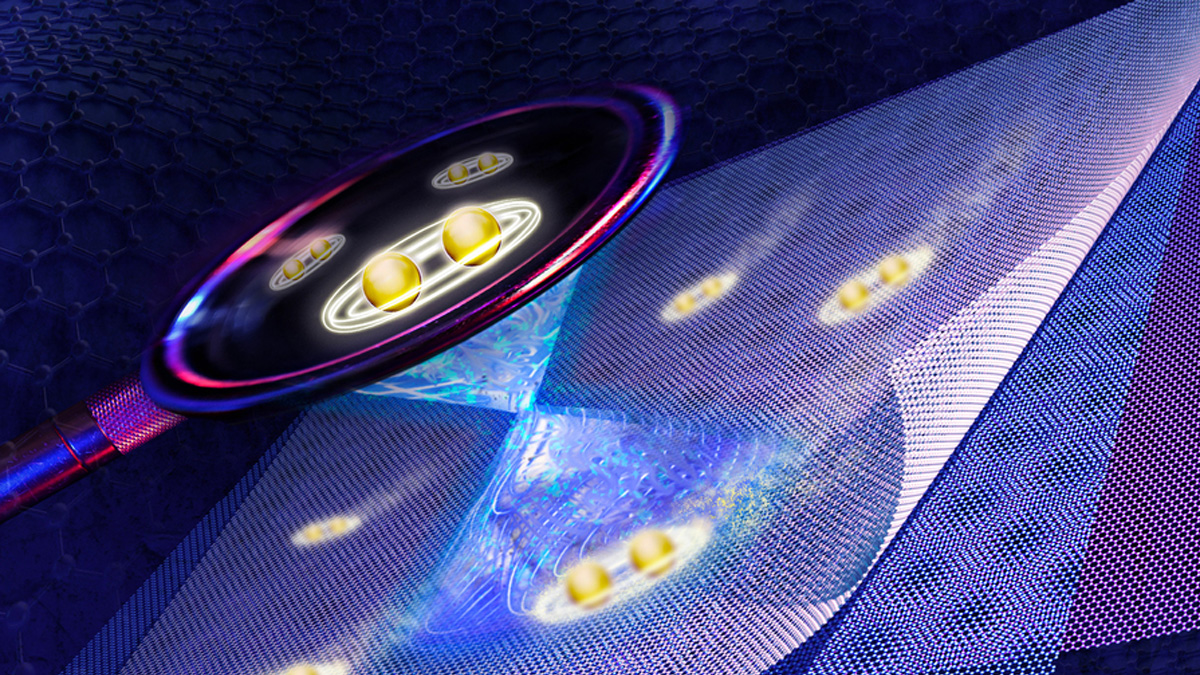
MATTG is made by stacking three graphene sheets at a precise twist that triggers exotic electronic states. While earlier studies hinted at unusual superconductivity, the new work, published in Science, provides the first direct measurement of the material’s superconducting gap — the energy scale that describes how strongly electrons pair up in the superconducting state.
The team found that MATTG’s gap looks dramatically different from that of conventional superconductors, confirming that it operates through a distinct, unconventional mechanism. Their custom experimental platform allowed them to track the gap in real time as superconductivity emerged, revealing electron pairs that are tightly bound — almost molecule-like — unlike the loose Cooper pairs in standard superconductors.

The researchers plan to deploy this technique across other 2D materials. As senior author Pablo Jarillo-Herrero notes, understanding one unconventional system could guide the design of superconductors that might one day work at room temperature.
Author