

















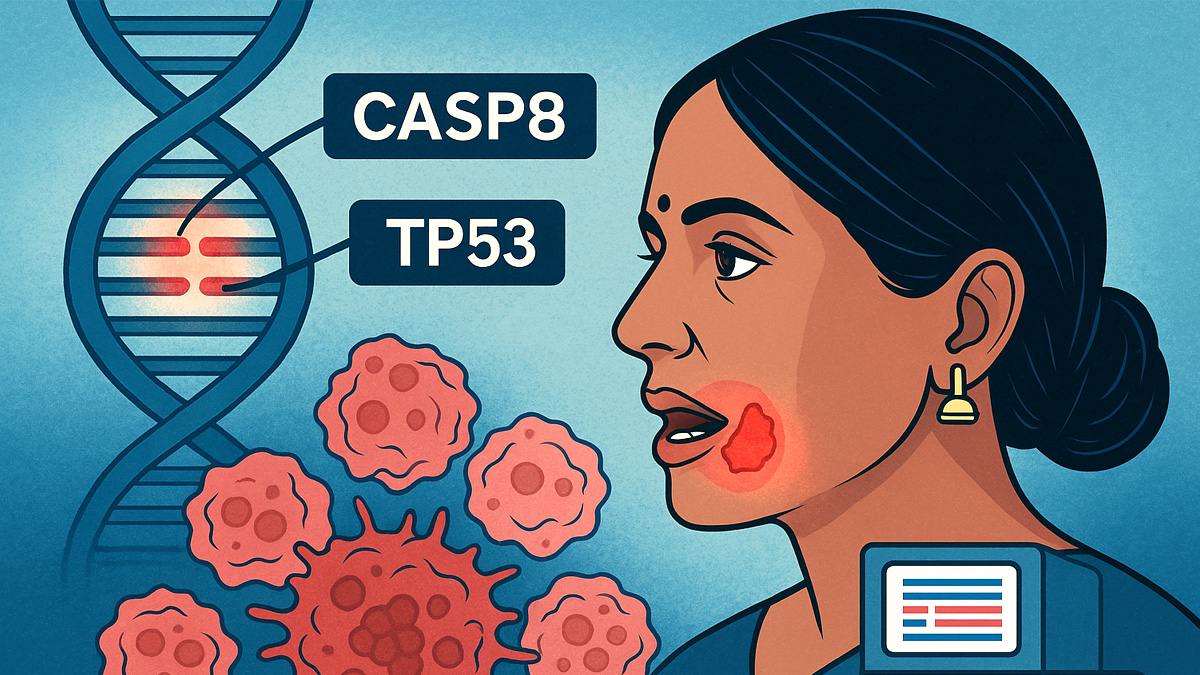
Indian researchers have uncovered a distinctive cancer-causing mutation that could help explain why oral cancer behaves more aggressively in many Indian women—especially in regions where tobacco-laced betel quid chewing is common. Despite India carrying one of the world’s highest oral cancer burdens, the disease in women has received far less attention than in men.
A team from JNCASR Bengaluru and NIBMG Kalyani, working with clinicians at SDUAHER in Kolar, conducted one of the first women-centric genetic studies of oral squamous cell carcinoma linked to the local Kaddipudi chewing habit. Using whole-exome sequencing and copy-number profiling of tumour and blood samples from 38 patients, the researchers identified ten major gene mutations driving the disease.
Their most striking discovery: CASP8 emerged as a key driver mutation—distinct from patterns seen in predominantly male patient studies. When CASP8 mutations co-occurred with alterations in TP53, tumours appeared markedly more aggressive and potentially deadlier.

Published in Clinical and Translational Medicine, the study also used AI-based tissue analysis to reveal two tumour subtypes with differing immune responses—a finding that could guide more personalised treatments for women in the future.
Author