











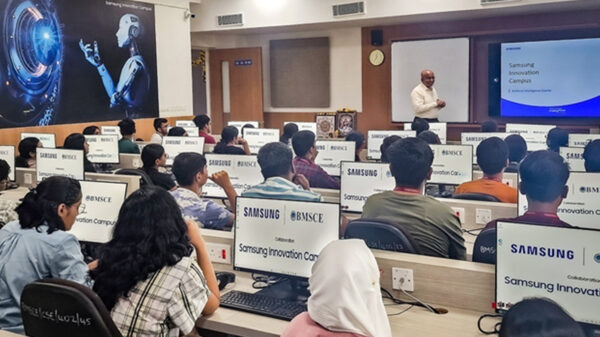






Higher education systems worldwide are undergoing a period of significant transformation as rapid technological change increasingly reshapes teaching, learning and institutional functioning. Technology is no longer viewed merely as an enabling tool but as a central force influencing educational practices, workplace expectations and social interaction, according to emerging global higher education outlooks for 2026.
Universities across regions, including India, are responding to a convergence of pressures that include the need for greater efficiency, fast-paced technological advances, evolving employer requirements, shifting student aspirations, the growing emphasis on entrepreneurship and innovation, and a global push towards sustainable development. Together, these forces are redefining the role and structure of higher education institutions.
Resource optimisation has become a key challenge. Institutions are operating under constrained budgets while facing rising expectations for learning outcomes, research output and societal impact. This has accelerated the adoption of data-driven governance models and technology-enabled administrative systems aimed at improving efficiency and accountability.

Technological advances, particularly in information and communication technologies, are among the most visible drivers of change. Developments in artificial intelligence, the Internet of Things, biotechnology and related fields are influencing teaching, research and industry engagement across disciplines. Observers note that, much like earlier industrial revolutions, the current Industry 4.0 phase is altering labour markets by automating routine tasks while increasing demand for new and more complex skill sets.
Within this context, universities are grappling with how artificial intelligence should be integrated into teaching and learning. The challenge is shifting from whether students should use AI tools to how they can be trained to use them responsibly. This includes developing the ability to critically evaluate AI-generated outputs and strengthening academic judgement. Faculty development is also emerging as a priority, with a growing focus on designing AI-enabled pedagogies that support learning without diminishing critical thinking.
As workplaces become more technologically driven, future jobs are expected to place greater emphasis on cognitive complexity, ethical judgement and interdisciplinary thinking. With machines increasingly handling routine analysis, universities are being called upon to prepare graduates to manage ambiguity, make value-based decisions and address ethical challenges.
At the same time, student expectations are changing, particularly among Generation Z. Beyond employability, students are increasingly seeking education that aligns with social impact, sustainability and responsible innovation. Higher education institutions are thus being encouraged to integrate career readiness with broader goals related to ethics, purpose and sustainable development as they prepare for the demands of 2026 and beyond.
Author