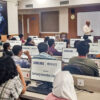
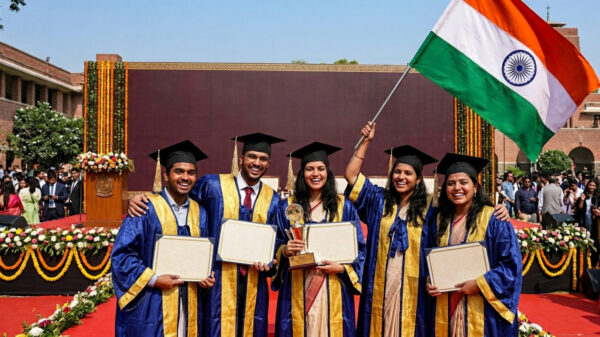


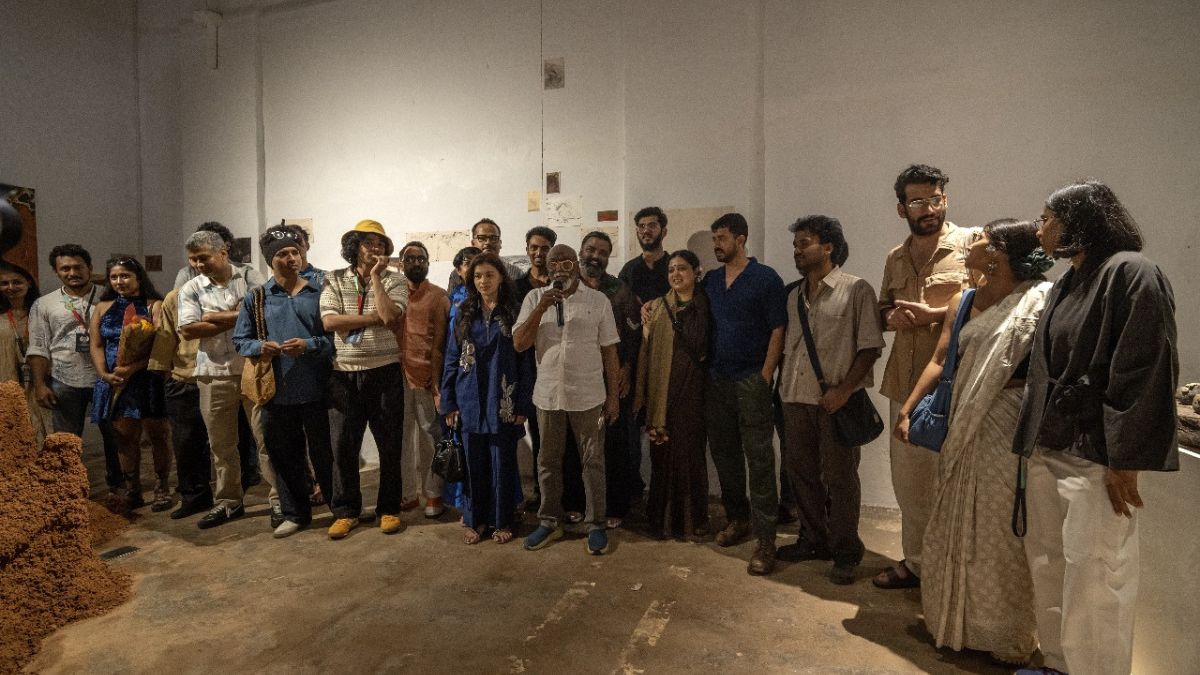
The Students’ Biennale opened at VKL Warehouse in Mattancherry on Saturday, providing young artists from across India a national platform to present their work and engage with contemporary art practices.
Conceived as an educational initiative of the Kochi Biennale Foundation (KBF), the Students’ Biennale brings together works by students from state-funded art institutions, enabling them to move beyond the classroom and participate in a wider artistic dialogue.
The exhibition is being held across five venues—VKL Warehouse, Arthshila Kochi, BMS Warehouse, St. Andrew’s Parish Hall and Space Gallery—and runs concurrently with the sixth edition of the Kochi-Muziris Biennale (KMB), India’s largest contemporary art festival.
The sixth Kochi-Muziris Biennale, titled For The Time Being, opened on December 12 and will continue until March 31, 2026. It features projects by 66 artists and collectives from over 25 countries, spread across 22 venues in Fort Kochi, Mattancherry, Ernakulam and Willingdon Island.
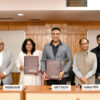
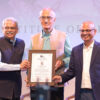
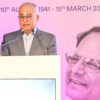
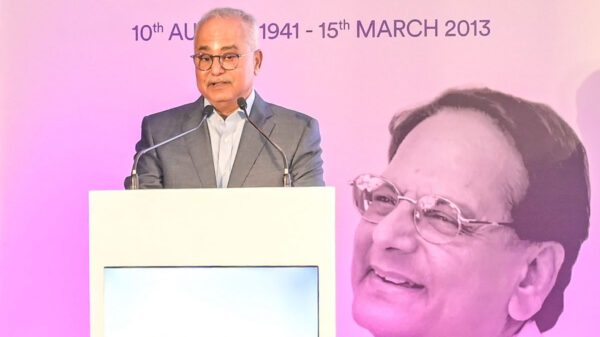
Inaugurating the Students’ Biennale, Bose Krishnamachari, president of the Kochi-Muziris Biennale, said the programme was launched in 2014 to give art students exposure to international practices, an opportunity he said was largely unavailable during his own student years. He noted that the initiative has grown steadily and is now in its sixth edition.
Mario D’Souza, director of programmes at KBF, said more than 175 government art colleges are participating in this edition. He added that student projects have been developed through sustained collaboration with educators, curators and artists.
For several participants, the Biennale marks a first major public showing. Laishram Membi Devi, an art student from Utkal University of Culture, Odisha, said exhibiting at the Students’ Biennale after visiting it as a viewer in 2018 was an enriching experience, offering opportunities to interact with artists and audiences from different parts of the world.
The Students’ Biennale is organised through a network of co-curators and artist collectives mentoring students across seven regions of India, covering North and West India, South India, the North-Himalayan states, East and Central India, the North-East and Sikkim, and parts of western and central India including Maharashtra, Bihar, Jharkhand and Madhya Pradesh.
Author